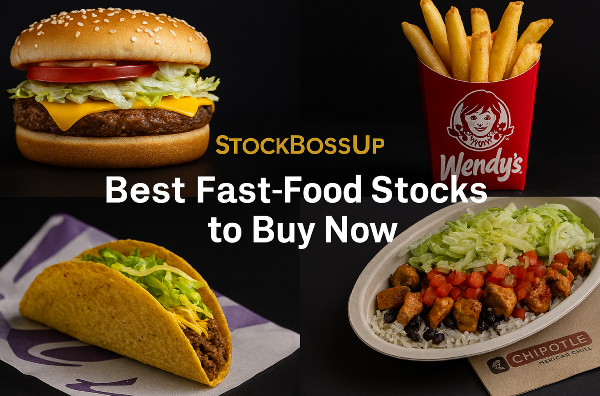
Fast‑food stocks give investors steady demand, strong brands, and simple business models. These companies serve millions of customers each day. Many also run franchise systems that help control costs and boost profit margins.
Top 5 Fast‑Food Stocks
- McDonald’s (MCD)
- Chipotle Mexican Grill (CMG)
- Yum! Brands (YUM)
- Wendy’s (WEN)
- Restaurant Brands International (QSR)
These companies lead the quick‑service restaurant space. They offer strong brand power, global reach, and long‑term growth potential.
Why Investors Look at Fast‑Food Stocks
Fast‑food chains stay busy even when the economy slows. People still want quick meals at low prices. This makes QSR stocks appealing for investors who want stability.
Many fast‑food companies also use franchising. Franchise owners run the stores, while the parent company collects fees. This model helps reduce risk and keeps profit margins high.
Another benefit is global expansion. Many brands continue to open new stores in high‑growth markets. This helps drive long‑term revenue.
McDonald’s (MCD)
McDonald’s is the largest fast‑food chain in the world. It has a strong brand and a huge global footprint. The company continues to invest in digital ordering, delivery, and drive‑thru upgrades.
Its franchise model keeps costs low and cash flow strong. McDonald’s also returns value to shareholders through dividends and buybacks.
Chipotle Mexican Grill (CMG)
Chipotle focuses on fresh ingredients and simple menu choices. It has grown fast over the past decade. Digital sales and loyalty programs help drive repeat customers.
Chipotle continues to open new stores each year. It also tests new formats like drive‑thru pickup lanes, which boost convenience.
Yum! Brands (YUM)
Yum! Brands owns KFC, Taco Bell, and Pizza Hut. These chains operate in more than 150 countries. The company benefits from a large franchise network and strong international growth.
Taco Bell remains a major driver in the U.S. market. KFC continues to expand in Asia and other global regions.
Wendy’s (WEN)
Wendy’s is known for fresh beef and a strong breakfast menu. The company has invested in digital ordering and delivery partnerships. These upgrades help increase sales and improve customer experience.
Wendy’s also continues to expand its franchise network. This supports long‑term growth and stable revenue.
Restaurant Brands International (QSR)
Restaurant Brands International owns Burger King, Popeyes, Tim Hortons, and Firehouse Subs. These brands give the company a wide reach across breakfast, chicken, and burgers.
Popeyes has seen strong growth thanks to its popular chicken sandwich. Burger King is also undergoing a major brand refresh to improve sales.
Fast‑Food Stock Comparison Table
| Company |
Ticker |
Key Brands |
Strength |
| McDonald’s |
MCD |
McDonald’s |
Global scale |
| Chipotle |
CMG |
Chipotle |
High growth |
| Yum! Brands |
YUM |
KFC, Taco Bell, Pizza Hut |
International reach |
| Wendy’s |
WEN |
Wendy’s |
Digital expansion |
| Restaurant Brands Intl. |
QSR |
Burger King, Popeyes, Tim Hortons |
Brand diversity |
What to Look for When Buying Fast‑Food Stocks
Investors should focus on a few key factors. Store growth is important. Companies that open new locations often see steady revenue increases. Digital sales also matter. Mobile apps and delivery partnerships help boost customer traffic.
Brand strength is another factor. Well‑known chains tend to perform better during slow economic periods. Franchise mix also plays a role. A higher share of franchised stores usually means lower costs and stronger margins.
Unique Characteristics of Fast Food Stocks
Fast‑food stocks stand out because they mix stability with steady long‑term growth. Many of the biggest chains use a franchise model, which keeps costs low and creates reliable income through fees and royalties. This structure helps companies stay profitable even when the economy slows. People still buy quick, affordable meals, so demand stays strong during tough times. That makes fast‑food stocks more resilient than many other consumer businesses.
These companies also benefit from powerful global brands and simple menus that scale well across different countries. Digital ordering, delivery apps, and drive‑thru upgrades help them grow without major changes to their core operations. When inflation rises, fast‑food chains can adjust prices in small steps without losing customers. This flexibility, combined with strong cash flow, makes the sector appealing for investors who want both defense and growth in one place.
How Fast‑Food Stocks Compare to Casual Dining and Beverage‑Focused Restaurant Stocks
Fast‑food stocks stand out because they offer steady demand, low operating costs, and strong brand power. Most quick‑service chains use a franchise model, which keeps expenses low and creates predictable cash flow. This makes fast‑food stocks more resilient during recessions, since customers often trade down from full‑service restaurants to cheaper, faster options. Their focus on drive‑thru, delivery, and mobile ordering also helps them grow even when foot traffic slows. These traits make fast‑food stocks some of the most stable choices in the restaurant industry.
Casual dining stocks behave differently. These companies rely on full‑service dining rooms, larger menus, and higher labor costs. Their revenue rises when the economy is strong and consumers spend more on sit‑down meals. But during slowdowns, casual dining chains often see sharper drops in traffic. Beverage‑focused restaurant stocks, such as coffee or smoothie chains, sit somewhere in the middle. They benefit from strong brand loyalty and frequent repeat purchases, but they can be sensitive to commodity prices and shifting consumer trends. When building a sector‑wide portfolio, fast‑food stocks often serve as the defensive anchor, while casual dining and beverage chains add growth potential when economic conditions improve.
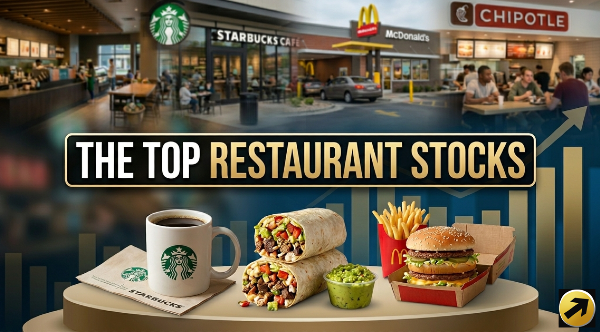
Read More: The Top Restaurant Stocks Voted by You!
Final Thoughts
Fast‑food stocks offer a mix of stability and growth. Brands like McDonald’s, Chipotle, and Yum! Brands continue to lead the QSR industry. Their strong customer demand and global expansion make them appealing for long‑term investors.
⚡ Explore More
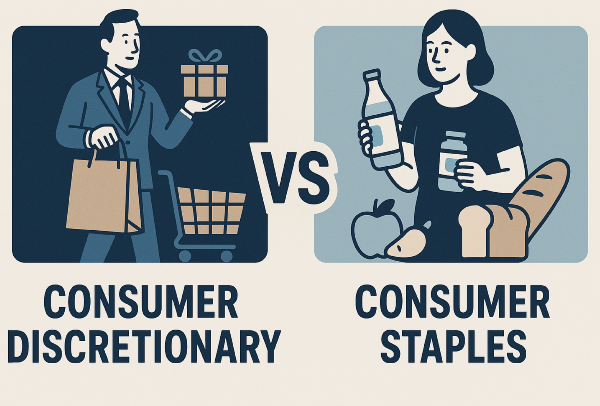
🏷️ Consumer Discretionary Sector
🍽️ Restaurant Industry — Core Overviews
📈 Performance & Financial Strength
🌍 Specialized & Global Categories
🚀 Ready to Deepen Your Research?
Unlock deeper insights, compare trends, and build a sharper investment strategy by exploring each topic above.



















Fast‑food stocks give investors steady demand, strong brands, and simple business models. These companies serve millions of customers each day. Many also run franchise systems that help control costs and boost profit margins.
Top 5 Fast‑Food Stocks
These companies lead the quick‑service restaurant space. They offer strong brand power, global reach, and long‑term growth potential.
Why Investors Look at Fast‑Food Stocks
Fast‑food chains stay busy even when the economy slows. People still want quick meals at low prices. This makes QSR stocks appealing for investors who want stability.
Many fast‑food companies also use franchising. Franchise owners run the stores, while the parent company collects fees. This model helps reduce risk and keeps profit margins high.
Another benefit is global expansion. Many brands continue to open new stores in high‑growth markets. This helps drive long‑term revenue.
McDonald’s (MCD)
McDonald’s is the largest fast‑food chain in the world. It has a strong brand and a huge global footprint. The company continues to invest in digital ordering, delivery, and drive‑thru upgrades.
Its franchise model keeps costs low and cash flow strong. McDonald’s also returns value to shareholders through dividends and buybacks.
Chipotle Mexican Grill (CMG)
Chipotle focuses on fresh ingredients and simple menu choices. It has grown fast over the past decade. Digital sales and loyalty programs help drive repeat customers.
Chipotle continues to open new stores each year. It also tests new formats like drive‑thru pickup lanes, which boost convenience.
Yum! Brands (YUM)
Yum! Brands owns KFC, Taco Bell, and Pizza Hut. These chains operate in more than 150 countries. The company benefits from a large franchise network and strong international growth.
Taco Bell remains a major driver in the U.S. market. KFC continues to expand in Asia and other global regions.
Wendy’s (WEN)
Wendy’s is known for fresh beef and a strong breakfast menu. The company has invested in digital ordering and delivery partnerships. These upgrades help increase sales and improve customer experience.
Wendy’s also continues to expand its franchise network. This supports long‑term growth and stable revenue.
Restaurant Brands International (QSR)
Restaurant Brands International owns Burger King, Popeyes, Tim Hortons, and Firehouse Subs. These brands give the company a wide reach across breakfast, chicken, and burgers.
Popeyes has seen strong growth thanks to its popular chicken sandwich. Burger King is also undergoing a major brand refresh to improve sales.
Fast‑Food Stock Comparison Table
What to Look for When Buying Fast‑Food Stocks
Investors should focus on a few key factors. Store growth is important. Companies that open new locations often see steady revenue increases. Digital sales also matter. Mobile apps and delivery partnerships help boost customer traffic.
Brand strength is another factor. Well‑known chains tend to perform better during slow economic periods. Franchise mix also plays a role. A higher share of franchised stores usually means lower costs and stronger margins.
Unique Characteristics of Fast Food Stocks
Fast‑food stocks stand out because they mix stability with steady long‑term growth. Many of the biggest chains use a franchise model, which keeps costs low and creates reliable income through fees and royalties. This structure helps companies stay profitable even when the economy slows. People still buy quick, affordable meals, so demand stays strong during tough times. That makes fast‑food stocks more resilient than many other consumer businesses.
These companies also benefit from powerful global brands and simple menus that scale well across different countries. Digital ordering, delivery apps, and drive‑thru upgrades help them grow without major changes to their core operations. When inflation rises, fast‑food chains can adjust prices in small steps without losing customers. This flexibility, combined with strong cash flow, makes the sector appealing for investors who want both defense and growth in one place.
How Fast‑Food Stocks Compare to Casual Dining and Beverage‑Focused Restaurant Stocks
Fast‑food stocks stand out because they offer steady demand, low operating costs, and strong brand power. Most quick‑service chains use a franchise model, which keeps expenses low and creates predictable cash flow. This makes fast‑food stocks more resilient during recessions, since customers often trade down from full‑service restaurants to cheaper, faster options. Their focus on drive‑thru, delivery, and mobile ordering also helps them grow even when foot traffic slows. These traits make fast‑food stocks some of the most stable choices in the restaurant industry.
Casual dining stocks behave differently. These companies rely on full‑service dining rooms, larger menus, and higher labor costs. Their revenue rises when the economy is strong and consumers spend more on sit‑down meals. But during slowdowns, casual dining chains often see sharper drops in traffic. Beverage‑focused restaurant stocks, such as coffee or smoothie chains, sit somewhere in the middle. They benefit from strong brand loyalty and frequent repeat purchases, but they can be sensitive to commodity prices and shifting consumer trends. When building a sector‑wide portfolio, fast‑food stocks often serve as the defensive anchor, while casual dining and beverage chains add growth potential when economic conditions improve.
Final Thoughts
Fast‑food stocks offer a mix of stability and growth. Brands like McDonald’s, Chipotle, and Yum! Brands continue to lead the QSR industry. Their strong customer demand and global expansion make them appealing for long‑term investors.
⚡ Explore More
🏷️ Consumer Discretionary Sector
🍽️ Restaurant Industry — Core Overviews
📈 Performance & Financial Strength
🌍 Specialized & Global Categories
🚀 Ready to Deepen Your Research?
Unlock deeper insights, compare trends, and build a sharper investment strategy by exploring each topic above.