🔑 Key Takeaways: How Supply Chain Disruptions Impact Auto Manufacturers
🌍 Global supply chains make auto manufacturers highly vulnerable to disruptions
Auto production depends on thousands of parts sourced from multiple countries. This global network increases efficiency but also creates exposure to delays caused by geopolitical events, logistics issues, or supplier failures.
🚚 Just-in-time manufacturing increases efficiency but amplifies production risk during delays
Automakers often rely on minimal inventory systems to reduce costs. While efficient in stable conditions, this approach makes production lines highly sensitive to even small supply chain interruptions.
🔋 Semiconductor and EV battery supply chains are the most critical and fragile points in modern auto production
Semiconductor chips and battery materials are essential for today’s vehicles. Shortages or bottlenecks in these areas can significantly reduce output and force manufacturers to delay or redesign vehicles.
📉 Supply chain disruptions directly affect costs, vehicle prices, and stock market performance
When supply chains are disrupted, production slows, costs rise, and vehicle availability decreases. These factors often lead to higher consumer prices and increased volatility in auto manufacturer stock prices.
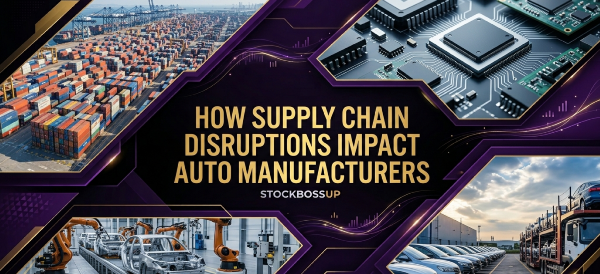
How Supply Chain Disruptions Impact Auto Manufacturers
Auto manufacturing depends on a tightly connected global supply chain. Every vehicle is built from thousands of parts that come from different countries, factories, and suppliers. When even one part of this system fails, the entire production process can slow down or stop.
The problem is not just complexity. It is dependency. Modern auto manufacturing is designed around “just-in-time” delivery, where parts arrive exactly when needed. This improves efficiency but reduces flexibility when disruptions occur.
Many people see finished vehicles on the road, but they do not see the network behind them. That network is fragile. When it breaks, the impact spreads quickly across production lines, dealerships, and even stock prices.
The real question is how supply chain disruptions shape the auto industry and why even small delays can have global consequences.
Why Are Auto Supply Chains So Complex?
Auto supply chains are complex because vehicles require a large number of specialized parts.
A single car can include:
- Engine components
- Electronic systems
- Semiconductor chips
- Tires and rubber parts
- Steel and aluminum structures
- Interior materials
These parts are often manufactured in different regions of the world.
This means a single vehicle may depend on dozens of suppliers across multiple countries.
A lesser-known fact is that some modern vehicles contain more than 30,000 individual parts sourced from over 20 different countries.
Why Do Small Disruptions Cause Big Problems?
Small disruptions can cause big problems because auto manufacturing has very little buffer inventory.
Factories rely on precise timing. Parts arrive just as they are needed.
If one supplier is delayed, the entire production line may slow down or stop.
This creates a domino effect across the supply chain.
| Disruption Type |
Production Impact |
Recovery Time |
| Minor delay |
Low |
1–3 days |
| Supplier shutdown |
Medium |
1–2 weeks |
| Port congestion |
High |
2–6 weeks |
| Natural disaster |
Very high |
Months |
Why Is “Just-in-Time” Manufacturing Risky?
Just-in-time manufacturing reduces storage costs by minimizing inventory.
However, it increases risk during disruptions.
If parts do not arrive on time, production cannot continue.
This system works well in stable conditions but struggles during global shocks.
A surprising detail is that some auto plants hold less than 48 hours of critical component inventory, making them highly sensitive to even short-term delays.
Why Do Semiconductor Shortages Impact the Auto Industry?
Semiconductors are essential for modern vehicles.
They control:
- Engine performance
- Safety systems
- Infotainment systems
- Driver assistance features
During global chip shortages, automakers were forced to reduce production or remove features from vehicles.
This showed how dependent the industry has become on a single type of component.
| Component Type |
Vehicle Dependency |
Supply Risk Level |
| Semiconductors |
Very High |
High |
| Steel |
High |
Medium |
| Rubber |
Medium |
Medium |
| Glass |
Medium |
Low |
Why Do Global Events Disrupt Auto Production?
Global events can disrupt supply chains in multiple ways.
These include:
- Pandemics
- Geopolitical conflicts
- Trade restrictions
- Natural disasters
- Shipping delays
Each event affects logistics, production, and material availability.
Because auto supply chains are global, disruptions in one region can affect production worldwide.
Why Are Ports and Shipping Delays So Critical?
Ports are key points in the auto supply chain.
Many parts are shipped internationally before reaching assembly plants.
When ports are congested, delays can build up quickly.
This affects production schedules and inventory planning.
| Logistics Issue |
Impact Level |
Industry Effect |
| Port congestion |
High |
Delayed assembly |
| Shipping delays |
Medium–High |
Inventory shortages |
| Container shortages |
High |
Increased costs |
| Fuel price spikes |
Medium |
Higher logistics costs |
Why Are EV Supply Chains More Fragile?
Electric vehicles depend on specialized components such as batteries and power electronics.
These components rely on rare materials and limited suppliers.
Battery supply chains are especially sensitive to mining output and geopolitical conditions.
A unique fact is that a large portion of global lithium processing is concentrated in just a few regions, creating supply bottlenecks during high demand.
Why Do Supplier Failures Cascade Through the Industry?
Supplier failures can cascade because many suppliers are interconnected.
If one supplier cannot deliver parts, downstream suppliers and assembly plants are also affected.
This creates a chain reaction across the industry.
Automakers often rely on multiple tiers of suppliers, which increases complexity.
| Supply Tier |
Role in Production |
Risk Level |
| Tier 1 suppliers |
Direct parts supply |
High |
| Tier 2 suppliers |
Component production |
Medium |
| Tier 3 suppliers |
Raw materials |
Medium |
| Logistics partners |
Transportation |
High |
Why Do Supply Chain Disruptions Affect Car Prices?
Supply chain disruptions increase production costs.
When parts are scarce, prices rise.
Automakers may pass some of these costs to consumers.
This can lead to higher vehicle prices or reduced features.
Why Are Inventory Strategies Changing?
Automakers are rethinking inventory strategies to reduce risk.
Some companies are increasing stock levels of critical parts.
Others are diversifying suppliers across multiple regions.
This reduces dependency on a single source.
However, holding more inventory increases storage and capital costs.
Why Do Regional Manufacturing Hubs Matter?
Regional manufacturing hubs help reduce supply chain risk.
By producing parts closer to assembly plants, companies can reduce shipping delays.
This also helps stabilize production during global disruptions.
However, building regional hubs requires long-term investment.
Why Are Supply Chain Disruptions Linked to Stock Volatility?
Supply chain disruptions directly affect auto manufacturer stock prices.
Investors react quickly to production delays and cost increases.
Even short-term disruptions can lead to stock price swings.
| Disruption Severity |
Stock Reaction |
Investor Sentiment |
| Minor |
Low volatility |
Neutral |
| Moderate |
Medium volatility |
Cautious |
| Severe |
High volatility |
Negative |
| Prolonged |
Very high |
Strong concern |
Why Are Technology Solutions Helping Supply Chains?
Technology is helping improve supply chain visibility.
Companies now use:
- Real-time tracking systems
- AI-based forecasting tools
- Automated inventory systems
- Digital supplier networks
These tools help reduce uncertainty and improve response times.
Why Do Labor Issues Affect Supply Chains?
Labor shortages and strikes can disrupt production and logistics.
Even if parts are available, lack of workers can slow assembly.
This adds another layer of risk to supply chain stability.
Why Are Supply Chains Becoming More Regional?
Many automakers are shifting toward regional supply chains.
This reduces reliance on long-distance shipping and global risks.
Regionalization improves stability but increases upfront costs.
What Is the Real Long-Term Impact of Supply Chain Disruptions?
Supply chain disruptions will continue to shape the auto industry.
They influence production speed, vehicle pricing, and global competitiveness.
The solution is not eliminating risk but improving resilience.
Companies that build flexible, diversified, and technology-driven supply chains will be better prepared for future disruptions.
In the end, supply chain stability is not just an operational issue. It is a core driver of competitiveness in the global auto industry.













🔑 Key Takeaways: How Supply Chain Disruptions Impact Auto Manufacturers
🌍 Global supply chains make auto manufacturers highly vulnerable to disruptions
Auto production depends on thousands of parts sourced from multiple countries. This global network increases efficiency but also creates exposure to delays caused by geopolitical events, logistics issues, or supplier failures.
🚚 Just-in-time manufacturing increases efficiency but amplifies production risk during delays
Automakers often rely on minimal inventory systems to reduce costs. While efficient in stable conditions, this approach makes production lines highly sensitive to even small supply chain interruptions.
🔋 Semiconductor and EV battery supply chains are the most critical and fragile points in modern auto production
Semiconductor chips and battery materials are essential for today’s vehicles. Shortages or bottlenecks in these areas can significantly reduce output and force manufacturers to delay or redesign vehicles.
📉 Supply chain disruptions directly affect costs, vehicle prices, and stock market performance
When supply chains are disrupted, production slows, costs rise, and vehicle availability decreases. These factors often lead to higher consumer prices and increased volatility in auto manufacturer stock prices.
How Supply Chain Disruptions Impact Auto Manufacturers
Auto manufacturing depends on a tightly connected global supply chain. Every vehicle is built from thousands of parts that come from different countries, factories, and suppliers. When even one part of this system fails, the entire production process can slow down or stop.
The problem is not just complexity. It is dependency. Modern auto manufacturing is designed around “just-in-time” delivery, where parts arrive exactly when needed. This improves efficiency but reduces flexibility when disruptions occur.
Many people see finished vehicles on the road, but they do not see the network behind them. That network is fragile. When it breaks, the impact spreads quickly across production lines, dealerships, and even stock prices.
The real question is how supply chain disruptions shape the auto industry and why even small delays can have global consequences.
Why Are Auto Supply Chains So Complex?
Auto supply chains are complex because vehicles require a large number of specialized parts.
A single car can include:
These parts are often manufactured in different regions of the world.
This means a single vehicle may depend on dozens of suppliers across multiple countries.
A lesser-known fact is that some modern vehicles contain more than 30,000 individual parts sourced from over 20 different countries.
Why Do Small Disruptions Cause Big Problems?
Small disruptions can cause big problems because auto manufacturing has very little buffer inventory.
Factories rely on precise timing. Parts arrive just as they are needed.
If one supplier is delayed, the entire production line may slow down or stop.
This creates a domino effect across the supply chain.
Why Is “Just-in-Time” Manufacturing Risky?
Just-in-time manufacturing reduces storage costs by minimizing inventory.
However, it increases risk during disruptions.
If parts do not arrive on time, production cannot continue.
This system works well in stable conditions but struggles during global shocks.
A surprising detail is that some auto plants hold less than 48 hours of critical component inventory, making them highly sensitive to even short-term delays.
Why Do Semiconductor Shortages Impact the Auto Industry?
Semiconductors are essential for modern vehicles.
They control:
During global chip shortages, automakers were forced to reduce production or remove features from vehicles.
This showed how dependent the industry has become on a single type of component.
Why Do Global Events Disrupt Auto Production?
Global events can disrupt supply chains in multiple ways.
These include:
Each event affects logistics, production, and material availability.
Because auto supply chains are global, disruptions in one region can affect production worldwide.
Why Are Ports and Shipping Delays So Critical?
Ports are key points in the auto supply chain.
Many parts are shipped internationally before reaching assembly plants.
When ports are congested, delays can build up quickly.
This affects production schedules and inventory planning.
Why Are EV Supply Chains More Fragile?
Electric vehicles depend on specialized components such as batteries and power electronics.
These components rely on rare materials and limited suppliers.
Battery supply chains are especially sensitive to mining output and geopolitical conditions.
A unique fact is that a large portion of global lithium processing is concentrated in just a few regions, creating supply bottlenecks during high demand.
Why Do Supplier Failures Cascade Through the Industry?
Supplier failures can cascade because many suppliers are interconnected.
If one supplier cannot deliver parts, downstream suppliers and assembly plants are also affected.
This creates a chain reaction across the industry.
Automakers often rely on multiple tiers of suppliers, which increases complexity.
Why Do Supply Chain Disruptions Affect Car Prices?
Supply chain disruptions increase production costs.
When parts are scarce, prices rise.
Automakers may pass some of these costs to consumers.
This can lead to higher vehicle prices or reduced features.
Why Are Inventory Strategies Changing?
Automakers are rethinking inventory strategies to reduce risk.
Some companies are increasing stock levels of critical parts.
Others are diversifying suppliers across multiple regions.
This reduces dependency on a single source.
However, holding more inventory increases storage and capital costs.
Why Do Regional Manufacturing Hubs Matter?
Regional manufacturing hubs help reduce supply chain risk.
By producing parts closer to assembly plants, companies can reduce shipping delays.
This also helps stabilize production during global disruptions.
However, building regional hubs requires long-term investment.
Why Are Supply Chain Disruptions Linked to Stock Volatility?
Supply chain disruptions directly affect auto manufacturer stock prices.
Investors react quickly to production delays and cost increases.
Even short-term disruptions can lead to stock price swings.
Why Are Technology Solutions Helping Supply Chains?
Technology is helping improve supply chain visibility.
Companies now use:
These tools help reduce uncertainty and improve response times.
Why Do Labor Issues Affect Supply Chains?
Labor shortages and strikes can disrupt production and logistics.
Even if parts are available, lack of workers can slow assembly.
This adds another layer of risk to supply chain stability.
Why Are Supply Chains Becoming More Regional?
Many automakers are shifting toward regional supply chains.
This reduces reliance on long-distance shipping and global risks.
Regionalization improves stability but increases upfront costs.
What Is the Real Long-Term Impact of Supply Chain Disruptions?
Supply chain disruptions will continue to shape the auto industry.
They influence production speed, vehicle pricing, and global competitiveness.
The solution is not eliminating risk but improving resilience.
Companies that build flexible, diversified, and technology-driven supply chains will be better prepared for future disruptions.
In the end, supply chain stability is not just an operational issue. It is a core driver of competitiveness in the global auto industry.