🔑 Key Takeaways: Regulatory Risks for Auto Manufacturers
🌍 Auto manufacturers face complex and constantly changing global regulations
Automakers must comply with safety, emissions, cybersecurity, and trade regulations that vary by country. These shifting rules create ongoing uncertainty and force companies to continuously adapt vehicle design and production strategies.
🚗 Emissions and EV regulations are accelerating the shift toward electric vehicle production
Strict emissions standards and government EV mandates are pushing automakers to invest heavily in electric vehicles. This transition increases costs in the short term but drives long-term industry transformation.
🔐 New regulatory risks now include software, data privacy, and cybersecurity requirements
Modern vehicles are connected and software-driven, which means regulators now focus on data protection, over-the-air updates, and cybersecurity. These digital rules add a new layer of compliance complexity beyond traditional safety standards.
📉 Regulatory delays and compliance costs can significantly impact profits and stock performance
Approval delays, policy changes, and rising compliance costs can slow product launches and reduce profitability. Investors closely monitor regulatory risks because they directly affect revenue timing and long-term competitiveness.
Regulatory Risks for Auto Manufacturers
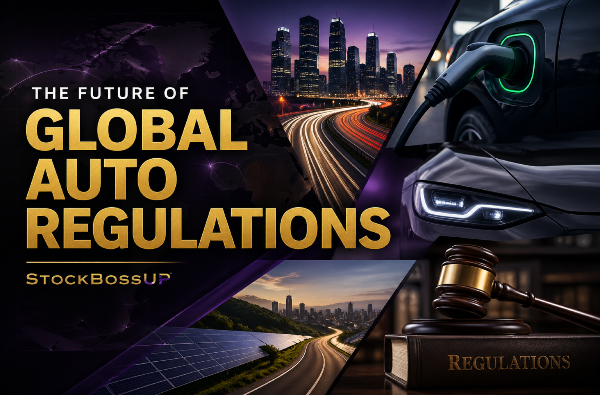
Auto manufacturers operate in one of the most heavily regulated industries in the world. Every vehicle must meet safety standards, emissions rules, and trade requirements before it can be sold. These rules are constantly changing, and that creates ongoing risk for companies.
The problem is not regulation itself. It is unpredictability. Rules differ across countries, and they often change faster than manufacturers can adjust production lines. This creates pressure on costs, design, and long-term strategy.
Many investors and consumers only see the final vehicle. They do not see the regulatory framework behind it. When that framework shifts, entire business models can be affected.
The real question is how regulatory risks shape the future of auto manufacturing and which companies are best prepared to adapt.
Why Are Auto Manufacturers So Heavily Regulated?
Auto manufacturers are heavily regulated because vehicles directly impact public safety, air quality, and energy use.
Governments set rules to reduce accidents, limit emissions, and improve efficiency.
These regulations include:
- Safety crash standards
- Emissions limits
- Fuel economy requirements
- Battery safety rules
- Data privacy laws for connected vehicles
Each rule adds complexity to vehicle design and production.
A lesser-known fact is that modern vehicles must often pass thousands of regulatory tests before they can be sold in a single major market, covering everything from crash impact to software behavior.
Why Do Emissions Regulations Create Long-Term Pressure?
Emissions regulations are one of the most important regulatory risks for automakers.
These rules limit how much pollution vehicles can produce. Over time, they have become stricter in many regions.
This has forced manufacturers to invest heavily in cleaner technologies, especially electric vehicles and hybrids.
However, compliance is expensive and time-consuming.
| Regulation Type |
Industry Impact |
Cost Pressure |
Long-Term Effect |
| CO₂ limits |
Engine redesign |
High |
EV transition |
| Fuel efficiency rules |
Lighter materials |
Medium |
Efficiency focus |
| City emission bans |
Market restrictions |
High |
EV adoption |
| Diesel restrictions |
Engine phase-out |
High |
Product shift |
Why Are Safety Regulations Constantly Increasing?
Safety regulations evolve as new technologies emerge.
As vehicles become more advanced, governments update safety requirements to match new risks.
This includes:
- Advanced driver assistance systems (ADAS)
- Autonomous driving features
- Pedestrian detection systems
- Cybersecurity protection
Each new feature must be tested and approved.
A surprising detail is that some modern vehicles must pass more than 100 separate crash and safety simulations before receiving approval in certain markets.
Why Do Different Countries Have Different Regulations?
Regulations vary widely between countries. This creates complexity for global manufacturers.
A vehicle approved in one region may need modifications before it can be sold in another.
This leads to:
- Multiple vehicle versions
- Region-specific software
- Adjusted safety systems
- Different emission configurations
| Region |
Regulation Strictness |
EV Policy Strength |
Approval Complexity |
| Europe |
Very High |
Strong |
High |
| North America |
High |
Medium |
Medium–High |
| China |
High |
Strong |
High |
| Emerging markets |
Medium |
Developing |
Medium |
Why Are EV Regulations Changing the Industry Faster?
Electric vehicles are central to new regulatory frameworks.
Governments view EVs as a key tool for reducing emissions and improving energy efficiency.
As a result, many countries are setting deadlines to phase out gas-powered vehicles.
This creates urgency for automakers to shift production strategies.
However, EV regulations also introduce new rules related to:
- Battery sourcing
- Recycling requirements
- Charging infrastructure standards
- Grid integration
Why Are Data Privacy Laws Becoming a New Risk?
Modern vehicles collect large amounts of data. This includes driving behavior, location, and system performance.
Governments are now regulating how this data is stored and used.
Automakers must ensure compliance with privacy laws in each market.
This adds a new layer of regulatory complexity beyond traditional vehicle rules.
A unique fact is that some connected vehicles now generate more data per day than early-generation smartphones, requiring advanced data management systems to remain compliant.
Why Do Regulatory Delays Impact Auto Stocks?
Regulatory approval delays can slow vehicle launches and affect revenue timing.
If a new model is delayed due to compliance issues, companies may miss sales targets.
This can affect investor confidence and stock performance.
| Regulatory Issue |
Stock Impact |
Business Effect |
| Approval delays |
Moderate decline |
Revenue delay |
| Compliance failure |
High decline |
Market restrictions |
| Policy change |
Volatility |
Strategy shift |
| New standards |
Mixed impact |
Cost increase |
Why Are Battery Regulations Becoming More Important?
Battery regulations are growing in importance as EV adoption increases.
Governments now regulate:
- Battery safety standards
- Recycling requirements
- Material sourcing rules
- End-of-life disposal
These rules affect both cost and supply chain structure.
Manufacturers must also prove that batteries meet strict environmental and safety standards.
Why Are Cybersecurity Rules Emerging in Auto Manufacturing?
Modern vehicles are connected to the internet. This creates cybersecurity risks.
Governments now require automakers to protect vehicles from hacking and software manipulation.
This includes:
- Secure software updates
- Encryption standards
- System authentication
- Remote access controls
Cybersecurity compliance is becoming as important as physical safety compliance.
Why Do Regulatory Risks Affect Global Competition?
Regulatory differences between regions affect global competition.
Companies that meet stricter standards early gain easier access to multiple markets.
Those that lag may face delays or restrictions.
This creates uneven competition across global automakers.
| Competitive Factor |
Impact on Leaders |
Impact on Laggards |
| Early compliance |
High advantage |
Low risk exposure |
| Late adaptation |
Medium risk |
High penalties |
| Regional flexibility |
Strong advantage |
Limited reach |
Why Are Compliance Costs Rising Over Time?
Compliance costs are rising because regulations are becoming more complex.
Vehicles must meet safety, emissions, and digital requirements simultaneously.
This increases:
- Engineering costs
- Testing requirements
- Certification processes
- Production adjustments
A surprising trend is that some automakers now allocate entire engineering teams solely to regulatory compliance for a single vehicle platform.
Why Are Software Regulations Becoming More Important?
As vehicles become more software-driven, governments are expanding regulations into digital systems.
This includes:
- Over-the-air updates
- Autonomous driving software
- Driver monitoring systems
- Data collection rules
Software is now a regulated part of vehicle design, not just hardware.
Why Do Regulatory Changes Require Long-Term Planning?
Regulatory changes are often announced years before full enforcement.
This gives automakers time to adjust, but it also creates uncertainty in long-term planning.
Companies must forecast future regulations and invest ahead of time.
This increases financial risk but also creates opportunities for early adopters.
What Is the Real Long-Term Impact of Regulatory Risks?
Regulatory risks will continue to shape the auto industry for decades.
They influence how cars are designed, where they are built, and how they are sold.
The solution is not avoiding regulation. It is building flexibility into design and production systems.
Companies that adapt early to regulatory changes gain a long-term advantage.
In the end, regulatory risks are not just obstacles. They are one of the main forces driving innovation and transformation in the global auto industry.














🔑 Key Takeaways: Regulatory Risks for Auto Manufacturers
🌍 Auto manufacturers face complex and constantly changing global regulations
Automakers must comply with safety, emissions, cybersecurity, and trade regulations that vary by country. These shifting rules create ongoing uncertainty and force companies to continuously adapt vehicle design and production strategies.
🚗 Emissions and EV regulations are accelerating the shift toward electric vehicle production
Strict emissions standards and government EV mandates are pushing automakers to invest heavily in electric vehicles. This transition increases costs in the short term but drives long-term industry transformation.
🔐 New regulatory risks now include software, data privacy, and cybersecurity requirements
Modern vehicles are connected and software-driven, which means regulators now focus on data protection, over-the-air updates, and cybersecurity. These digital rules add a new layer of compliance complexity beyond traditional safety standards.
📉 Regulatory delays and compliance costs can significantly impact profits and stock performance
Approval delays, policy changes, and rising compliance costs can slow product launches and reduce profitability. Investors closely monitor regulatory risks because they directly affect revenue timing and long-term competitiveness.
Regulatory Risks for Auto Manufacturers
Auto manufacturers operate in one of the most heavily regulated industries in the world. Every vehicle must meet safety standards, emissions rules, and trade requirements before it can be sold. These rules are constantly changing, and that creates ongoing risk for companies.
The problem is not regulation itself. It is unpredictability. Rules differ across countries, and they often change faster than manufacturers can adjust production lines. This creates pressure on costs, design, and long-term strategy.
Many investors and consumers only see the final vehicle. They do not see the regulatory framework behind it. When that framework shifts, entire business models can be affected.
The real question is how regulatory risks shape the future of auto manufacturing and which companies are best prepared to adapt.
Why Are Auto Manufacturers So Heavily Regulated?
Auto manufacturers are heavily regulated because vehicles directly impact public safety, air quality, and energy use.
Governments set rules to reduce accidents, limit emissions, and improve efficiency.
These regulations include:
Each rule adds complexity to vehicle design and production.
A lesser-known fact is that modern vehicles must often pass thousands of regulatory tests before they can be sold in a single major market, covering everything from crash impact to software behavior.
Why Do Emissions Regulations Create Long-Term Pressure?
Emissions regulations are one of the most important regulatory risks for automakers.
These rules limit how much pollution vehicles can produce. Over time, they have become stricter in many regions.
This has forced manufacturers to invest heavily in cleaner technologies, especially electric vehicles and hybrids.
However, compliance is expensive and time-consuming.
Why Are Safety Regulations Constantly Increasing?
Safety regulations evolve as new technologies emerge.
As vehicles become more advanced, governments update safety requirements to match new risks.
This includes:
Each new feature must be tested and approved.
A surprising detail is that some modern vehicles must pass more than 100 separate crash and safety simulations before receiving approval in certain markets.
Why Do Different Countries Have Different Regulations?
Regulations vary widely between countries. This creates complexity for global manufacturers.
A vehicle approved in one region may need modifications before it can be sold in another.
This leads to:
Why Are EV Regulations Changing the Industry Faster?
Electric vehicles are central to new regulatory frameworks.
Governments view EVs as a key tool for reducing emissions and improving energy efficiency.
As a result, many countries are setting deadlines to phase out gas-powered vehicles.
This creates urgency for automakers to shift production strategies.
However, EV regulations also introduce new rules related to:
Why Are Data Privacy Laws Becoming a New Risk?
Modern vehicles collect large amounts of data. This includes driving behavior, location, and system performance.
Governments are now regulating how this data is stored and used.
Automakers must ensure compliance with privacy laws in each market.
This adds a new layer of regulatory complexity beyond traditional vehicle rules.
A unique fact is that some connected vehicles now generate more data per day than early-generation smartphones, requiring advanced data management systems to remain compliant.
Why Do Regulatory Delays Impact Auto Stocks?
Regulatory approval delays can slow vehicle launches and affect revenue timing.
If a new model is delayed due to compliance issues, companies may miss sales targets.
This can affect investor confidence and stock performance.
Why Are Battery Regulations Becoming More Important?
Battery regulations are growing in importance as EV adoption increases.
Governments now regulate:
These rules affect both cost and supply chain structure.
Manufacturers must also prove that batteries meet strict environmental and safety standards.
Why Are Cybersecurity Rules Emerging in Auto Manufacturing?
Modern vehicles are connected to the internet. This creates cybersecurity risks.
Governments now require automakers to protect vehicles from hacking and software manipulation.
This includes:
Cybersecurity compliance is becoming as important as physical safety compliance.
Why Do Regulatory Risks Affect Global Competition?
Regulatory differences between regions affect global competition.
Companies that meet stricter standards early gain easier access to multiple markets.
Those that lag may face delays or restrictions.
This creates uneven competition across global automakers.
Why Are Compliance Costs Rising Over Time?
Compliance costs are rising because regulations are becoming more complex.
Vehicles must meet safety, emissions, and digital requirements simultaneously.
This increases:
A surprising trend is that some automakers now allocate entire engineering teams solely to regulatory compliance for a single vehicle platform.
Why Are Software Regulations Becoming More Important?
As vehicles become more software-driven, governments are expanding regulations into digital systems.
This includes:
Software is now a regulated part of vehicle design, not just hardware.
Why Do Regulatory Changes Require Long-Term Planning?
Regulatory changes are often announced years before full enforcement.
This gives automakers time to adjust, but it also creates uncertainty in long-term planning.
Companies must forecast future regulations and invest ahead of time.
This increases financial risk but also creates opportunities for early adopters.
What Is the Real Long-Term Impact of Regulatory Risks?
Regulatory risks will continue to shape the auto industry for decades.
They influence how cars are designed, where they are built, and how they are sold.
The solution is not avoiding regulation. It is building flexibility into design and production systems.
Companies that adapt early to regulatory changes gain a long-term advantage.
In the end, regulatory risks are not just obstacles. They are one of the main forces driving innovation and transformation in the global auto industry.