Last updated on 4/21 by Noah Brody
New Restaurant Stocks
Restaurant investing isn’t just about big names like McDonald’s or Starbucks anymore. A wave of new restaurant stocks has entered the market, offering fresh concepts, tech-driven models, and niche menus. But here’s the problem: many of these new entrants are exciting on the surface but struggle to scale profitably. Investors often chase hype without understanding the fundamentals. So how do you spot a new restaurant stock worth owning?
This article explores recently listed restaurant companies, their business models, and what separates the promising from the risky. The most compelling pick won’t be revealed until the end. Many investors compare new listings with broader growth leaders to understand long-term potential.
The Latest Restaurant IPOs
| Company |
Ticker |
IPO Date |
Description |
| Sweetgreen |
SG |
Nov 2021 |
Fast‑casual salad chain known for digital‑first operations. |
| Dutch Bros |
BROS |
Sept 2021 |
Drive‑thru coffee chain with rapid U.S. expansion. |
| CAVA Group |
CAVA |
June 2023 |
Mediterranean fast‑casual chain offering bowls, pitas, and salads. |
| Portillo’s |
PTLO |
Oct 2021 |
Chicago‑style fast‑casual chain specializing in hot dogs and beef sandwiches. |
| First Watch Restaurant Group |
FWRG |
Oct 2021 |
Daytime‑only breakfast/brunch restaurant concept. |
| Krispy Kreme (Re‑IPO) |
DNUT |
July 2021 |
Iconic doughnut chain returning to public markets. |
| BurgerFi International |
BFI |
Dec 2020 |
Better‑burger fast‑casual chain (SPAC merger). |
| FAT Brands (SPAC expansion) |
FAT |
2021–2022 |
Multi‑brand restaurant franchisor (Johnny Rockets, Fatburger). |
| The ONE Group (STK Steakhouse) |
STKS |
2020 |
Upscale steakhouse operator. |
| Arcos Dorados (McDonald’s LATAM) |
ARCO |
2011 |
Largest McDonald’s franchisee globally; included for completeness as a major international restaurant IPO. |
Important Notes
- Restaurant IPO activity has been unusually slow since 2022, with most new listings coming from SPAC mergers or restaurant‑adjacent foodservice brands rather than traditional IPOs.
- The most recent true restaurant IPO among major U.S. exchanges is CAVA (2023).
Why Most Investors Get Burned by New Listings
New restaurant stocks often launch with buzz. They’re trendy, fast-growing, and backed by venture capital. But many fail to deliver consistent profits. Investors get caught up in the story and ignore the numbers.
Common pitfalls include:
- High operating costs
- Narrow menus
- Limited geographic reach
- Weak margins
- Overreliance on digital hype
Some investors also compare new listings with fast-growing chains in other categories:
| Metric |
Why It Matters |
What Strong Looks Like |
| Revenue growth |
Shows demand |
15%+ annually |
| Net margin |
Measures profit |
8%+ is solid |
| Store count growth |
Expands reach |
10%+ yearly |
| Digital sales |
Boosts efficiency |
40%+ of revenue |
| Loyalty program |
Drives retention |
30%+ user adoption |
Why CAVA Is Leading the Pack
CAVA Group (CAVA) went public in 2023 and quickly gained attention. It offers Mediterranean bowls and salads with a focus on health and speed.
CAVA uses tech to streamline operations. It has a strong loyalty program and efficient kitchens. The company expands steadily and targets urban and suburban areas.
Its risks include competition and food costs. But its brand and growth rate make it a standout. CAVA’s IPO was one of the most successful restaurant debuts in recent years. Some investors compare CAVA’s global potential with international-focused restaurant stocks.
Why First Watch Is Quietly Scaling
First Watch (FWRG) focuses on breakfast and brunch. It grows through company-owned stores and targets suburban markets.
First Watch invests in fresh ingredients and seasonal menus. It also uses digital tools to improve operations. The company avoids franchising, which gives it control over quality.
Its risks include limited hours and rising food costs. But its niche and steady growth make it a quiet contender. Some investors compare First Watch with long-term casual dining performers.
Why Sweetgreen Is Betting Big on Tech
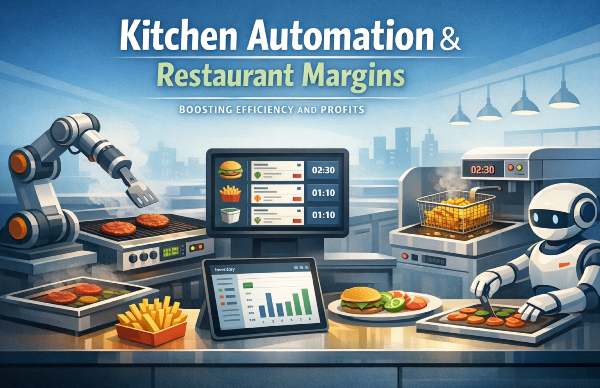
Sweetgreen (SG) focuses on healthy salads and bowls. It invests heavily in technology. The company uses digital ordering, smart kitchens, and delivery.
Sweetgreen grows through company-owned stores. It targets urban and suburban areas. The company also experiments with automation.
Its risks include high costs and a narrow menu. But its tech-driven model supports fast growth. Sweetgreen’s robotic salad assembly line is one of the first of its kind in the industry. Some investors compare Sweetgreen with other beverage and health-focused restaurant brands.
Why Portillo’s Is Expanding Regionally
Portillo’s (PTLO) serves Chicago-style food like hot dogs and Italian beef. It grows through company-owned stores and targets new regions.
Portillo’s invests in drive-thru efficiency and digital ordering. It also builds large-format stores with high volume.
Its risks include regional brand awareness and labor costs. But its unique menu and expansion model support growth. Portillo’s stores often generate over $7 million in annual revenue per location, far above industry averages. Some investors compare Portillo’s margin strength with top profit-focused restaurant stocks:
| Company |
Revenue Growth |
Store Count Growth |
Digital Sales Share |
Unique Feature |
| CAVA |
~20% |
~12% |
~45% |
Mediterranean bowls |
| First Watch |
~10% |
~8% |
~30% |
Breakfast-only model |
| Sweetgreen |
~25% |
~15% |
~50% |
Robotic kitchens |
| Portillo’s |
~18% |
~10% |
~35% |
High-volume stores |
Why FAT Brands Is a Mixed Bag
FAT Brands (FAT) owns multiple restaurant brands including Fatburger, Johnny Rockets, and Elevation Burger. It grows through franchising and acquisitions.
FAT Brands expands quickly but carries high debt. It also faces integration challenges across its portfolio.
Its risks include financial complexity and brand dilution. But its franchising model offers scale. Investors often compare FAT Brands with other franchise-heavy restaurant stocks.
Why Noodles & Company Is Trying to Rebound
Noodles & Company (NDLS) offers pasta-based meals with global flavors. It focuses on fast-casual service and digital ordering.
Noodles & Company has struggled with margins and store closures. But it continues to invest in menu innovation and loyalty programs.
Its risks include competition and cost control. But its brand and niche menu give it a chance to rebound. Some investors compare its performance with companies that hold up well during inflation.
Why BurgerFi Is Betting on Premium Burgers
BurgerFi (BFI) offers gourmet burgers and shakes. It targets urban and suburban areas with a premium fast-casual model.
BurgerFi grows through franchising and company-owned stores. It also acquired Anthony’s Coal Fired Pizza to expand its portfolio.
Its risks include brand awareness and competition. But its premium positioning and expansion strategy offer upside. Some investors compare BurgerFi with fast food chains that scale quickly.
Why Muscle Maker Is Going Niche
Muscle Maker (GRIL) focuses on protein-rich meals and health-conscious menus. It targets fitness enthusiasts and college campuses.
Muscle Maker expands through franchising and partnerships. It also experiments with ghost kitchens and delivery-only models.
Its risks include limited brand reach and menu appeal. But its niche focus gives it a unique angle in the market. Some investors compare niche brands like this with companies that stay resilient during recessions.
So Which New Restaurant Stock Stands Out?
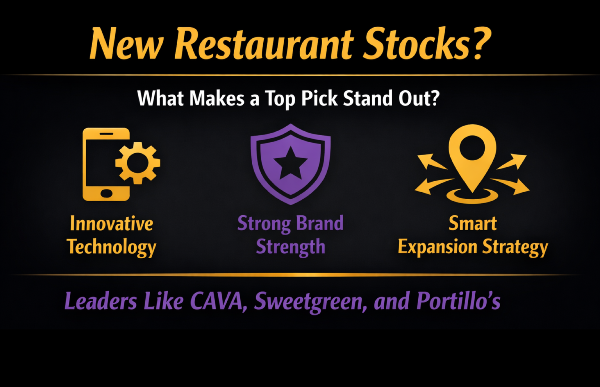
New restaurant stocks offer fresh ideas and fast growth. But not all are built to last. The best picks combine tech, brand strength, and smart expansion.
Top contenders include:
- CAVA
- Sweetgreen
- Portillo’s
- First Watch
Each has a unique strategy. CAVA leads with health and tech. Sweetgreen bets on automation. Portillo’s scales with high-volume stores. First Watch focuses on breakfast and quality.
🔎✨ Read More: Restaurant & Food Stock Insights Hub
Stay ahead of the market with our expertly curated deep dives into high-growth food and restaurant investments. Explore the latest opportunities, trends, and analysis below:
🍽️ Restaurant Growth Leaders
🥗 Food Stock Strategy & Picks










Last updated on 4/21 by Noah Brody
New Restaurant Stocks
Restaurant investing isn’t just about big names like McDonald’s or Starbucks anymore. A wave of new restaurant stocks has entered the market, offering fresh concepts, tech-driven models, and niche menus. But here’s the problem: many of these new entrants are exciting on the surface but struggle to scale profitably. Investors often chase hype without understanding the fundamentals. So how do you spot a new restaurant stock worth owning?
This article explores recently listed restaurant companies, their business models, and what separates the promising from the risky. The most compelling pick won’t be revealed until the end. Many investors compare new listings with broader growth leaders to understand long-term potential.
The Latest Restaurant IPOs
Important Notes
Why Most Investors Get Burned by New Listings
New restaurant stocks often launch with buzz. They’re trendy, fast-growing, and backed by venture capital. But many fail to deliver consistent profits. Investors get caught up in the story and ignore the numbers.
Common pitfalls include:
Some investors also compare new listings with fast-growing chains in other categories:
Why CAVA Is Leading the Pack
CAVA Group (CAVA) went public in 2023 and quickly gained attention. It offers Mediterranean bowls and salads with a focus on health and speed.
CAVA uses tech to streamline operations. It has a strong loyalty program and efficient kitchens. The company expands steadily and targets urban and suburban areas.
Its risks include competition and food costs. But its brand and growth rate make it a standout. CAVA’s IPO was one of the most successful restaurant debuts in recent years. Some investors compare CAVA’s global potential with international-focused restaurant stocks.
Why First Watch Is Quietly Scaling
First Watch (FWRG) focuses on breakfast and brunch. It grows through company-owned stores and targets suburban markets.
First Watch invests in fresh ingredients and seasonal menus. It also uses digital tools to improve operations. The company avoids franchising, which gives it control over quality.
Its risks include limited hours and rising food costs. But its niche and steady growth make it a quiet contender. Some investors compare First Watch with long-term casual dining performers.
Why Sweetgreen Is Betting Big on Tech
Sweetgreen (SG) focuses on healthy salads and bowls. It invests heavily in technology. The company uses digital ordering, smart kitchens, and delivery.
Sweetgreen grows through company-owned stores. It targets urban and suburban areas. The company also experiments with automation.
Its risks include high costs and a narrow menu. But its tech-driven model supports fast growth. Sweetgreen’s robotic salad assembly line is one of the first of its kind in the industry. Some investors compare Sweetgreen with other beverage and health-focused restaurant brands.
Why Portillo’s Is Expanding Regionally
Portillo’s (PTLO) serves Chicago-style food like hot dogs and Italian beef. It grows through company-owned stores and targets new regions.
Portillo’s invests in drive-thru efficiency and digital ordering. It also builds large-format stores with high volume.
Its risks include regional brand awareness and labor costs. But its unique menu and expansion model support growth. Portillo’s stores often generate over $7 million in annual revenue per location, far above industry averages. Some investors compare Portillo’s margin strength with top profit-focused restaurant stocks:
Why FAT Brands Is a Mixed Bag
FAT Brands (FAT) owns multiple restaurant brands including Fatburger, Johnny Rockets, and Elevation Burger. It grows through franchising and acquisitions.
FAT Brands expands quickly but carries high debt. It also faces integration challenges across its portfolio.
Its risks include financial complexity and brand dilution. But its franchising model offers scale. Investors often compare FAT Brands with other franchise-heavy restaurant stocks.
Why Noodles & Company Is Trying to Rebound
Noodles & Company (NDLS) offers pasta-based meals with global flavors. It focuses on fast-casual service and digital ordering.
Noodles & Company has struggled with margins and store closures. But it continues to invest in menu innovation and loyalty programs.
Its risks include competition and cost control. But its brand and niche menu give it a chance to rebound. Some investors compare its performance with companies that hold up well during inflation.
Why BurgerFi Is Betting on Premium Burgers
BurgerFi (BFI) offers gourmet burgers and shakes. It targets urban and suburban areas with a premium fast-casual model.
BurgerFi grows through franchising and company-owned stores. It also acquired Anthony’s Coal Fired Pizza to expand its portfolio.
Its risks include brand awareness and competition. But its premium positioning and expansion strategy offer upside. Some investors compare BurgerFi with fast food chains that scale quickly.
Why Muscle Maker Is Going Niche
Muscle Maker (GRIL) focuses on protein-rich meals and health-conscious menus. It targets fitness enthusiasts and college campuses.
Muscle Maker expands through franchising and partnerships. It also experiments with ghost kitchens and delivery-only models.
Its risks include limited brand reach and menu appeal. But its niche focus gives it a unique angle in the market. Some investors compare niche brands like this with companies that stay resilient during recessions.
So Which New Restaurant Stock Stands Out?
New restaurant stocks offer fresh ideas and fast growth. But not all are built to last. The best picks combine tech, brand strength, and smart expansion.
Top contenders include:
Each has a unique strategy. CAVA leads with health and tech. Sweetgreen bets on automation. Portillo’s scales with high-volume stores. First Watch focuses on breakfast and quality.
🔎✨ Read More: Restaurant & Food Stock Insights Hub
🍽️ Restaurant Growth Leaders
🥗 Food Stock Strategy & Picks