Last updated on 4/21 by Noah Brody
What Is a Good Food Stock?
Food stocks seem simple. People eat every day. Companies sell food. Revenue flows. But many investors miss a key problem: not all food companies grow the same way. Some have strong brands but weak margins. Others grow fast but burn cash. The real challenge is finding a food stock that balances growth, stability, and adaptability.
This article explores what makes a food stock “good” and how to spot long-term winners. We’ll look at top companies, key metrics, and common mistakes. The best pick won’t be revealed until the end. Many investors compare food stocks with fast-growing restaurant names to understand broader trends:
Why Most People Choose the Wrong Food Stocks
Many investors chase big names. They look at revenue and market share. But those numbers don’t always mean strong returns. A company can sell billions in products and still struggle with costs.
Good food stocks share a few traits:
- Steady revenue and profit growth
- Strong brand loyalty
- Global reach
- Smart use of technology
- Resilience during inflation or recession
Some investors also look at restaurant companies with strong dividend records to compare stability:
| Metric |
Why It Matters |
What Strong Looks Like |
| Revenue growth |
Shows demand |
5%+ annually |
| Net margin |
Measures profit |
10%+ is strong |
| Dividend history |
Signals stability |
5+ years of increases |
| Global reach |
Opens new markets |
50+ countries |
| Digital sales |
Boosts efficiency |
30%+ of revenue |
Why Nestlé Is Built for Stability
Nestlé (NSRGY) owns brands like Nescafé, KitKat, and Gerber. It sells in nearly every country. The company focuses on health, wellness, and clean ingredients.
Nestlé also invests in supplements and plant-based foods. It sold its stake in L’Oréal to focus more on nutrition. That move surprised many investors.
Nestlé’s risks include slow growth in mature markets. But its brand power and global scale make it a reliable pick. Investors who want global exposure often compare Nestlé with international restaurant stocks.
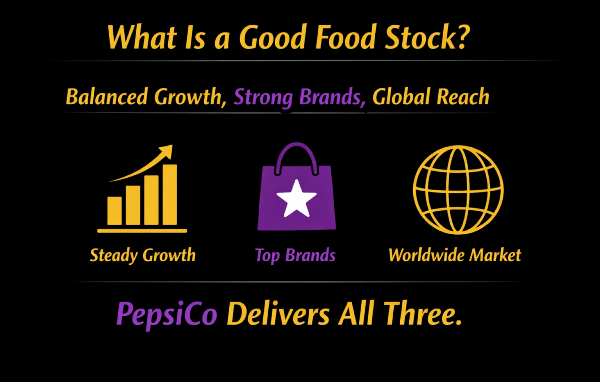
Why PepsiCo Offers Balance
PepsiCo (PEP) is known for soda. But its snack business is even bigger. Lay’s, Doritos, and Quaker drive strong sales. The company also owns Gatorade and Tropicana.
PepsiCo adapts quickly. It launches low-sugar drinks and protein snacks. It uses data to improve shelf placement and pricing.
PepsiCo’s mix of drinks and snacks gives it balance. When soda sales slow, snacks often grow. This helps the company stay steady.
| Company |
Revenue (2025) |
Net Margin |
Dividend Yield |
Global Reach |
| Nestlé |
$100B+ |
~14% |
~2.5% |
180+ countries |
| PepsiCo |
$90B+ |
~10% |
~2.8% |
200+ countries |
PepsiCo’s stability often appeals to investors who follow stocks that hold up well during inflation.
Why Mondelez Dominates Snacks Quietly
Mondelez (MDLZ) owns Oreo, Ritz, and Cadbury. It focuses on snacks and sweets. The company grows through small acquisitions and smart marketing.
Mondelez has strong margins and steady cash flow. It uses digital tools to track consumer behavior. This helps it launch new products faster.
Its risks include sugar regulations and health trends. But its brand strength keeps demand high. Mondelez is often compared with companies known for high profitability.
Why Tyson Foods Is at a Crossroads
Tyson Foods (TSN) supplies chicken, beef, and pork. It also owns Jimmy Dean and Hillshire Farm.
Tyson faces rising feed costs and labor shortages. It also deals with changing views on meat. To adapt, Tyson invests in plant-based protein and automation.
Tyson was an early investor in Beyond Meat before selling its stake in 2019.
Tyson’s cyclical nature often leads investors to compare it with recession-resistant restaurant stocks
Why General Mills Stays Relevant
General Mills (GIS) owns Cheerios, Betty Crocker, and Nature Valley. It also owns pet food brands like Blue Buffalo.
General Mills adapts to health trends. It invests in e-commerce and direct-to-consumer sales. It also controls costs well.
Its risks include inflation and changing breakfast habits. But its brand mix gives it stability.
| Company |
Dividend History |
Digital Sales |
Plant-Based Focus |
Pet Food Exposure |
| Mondelez |
10+ years |
Moderate |
Low |
None |
| Tyson |
5+ years |
Low |
Medium |
None |
| General Mills |
15+ years |
Growing |
Medium |
High |
General Mills appeals to investors who also follow long-term casual dining stocks.
Why Kellogg’s Took a Bold Step
Kellogg’s (K) split into two companies. One focuses on snacks. The other on cereals. This move aims to unlock value.
The snack unit includes Pringles and Cheez-It. The cereal unit includes Corn Flakes and Special K. Each unit now operates with its own strategy.
Kellogg’s split is rare in the food industry. Most companies grow by merging, not dividing.
Why Hormel Foods Is a Quiet Performer
Hormel (HRL) owns brands like Spam, Skippy, and Applegate. It focuses on protein and shelf-stable foods. The company also invests in plant-based and ethnic flavors.
Hormel has a long history of dividend growth. It also keeps a strong balance sheet and low debt.
Its risks include commodity prices and changing consumer tastes. But its steady performance makes it a reliable pick.
Hormel’s slow-and-steady profile often appeals to investors who follow franchise-heavy restaurant stocks.
Why Conagra Adapts Quickly
Conagra Brands (CAG) owns Healthy Choice, Birds Eye, and Slim Jim. It focuses on frozen foods and snacks.
Conagra adapts quickly to health trends. It invests in packaging and automation. The company targets younger consumers with bold flavors and convenience.
Its risks include competition and inflation. But its brand mix gives it flexibility.
| Company |
Focus Area |
Dividend Yield |
Innovation Score |
| Kellogg’s |
Snacks & Cereal |
~3.5% |
Medium |
| Hormel |
Protein & Shelf-Stable |
~2.7% |
Medium |
| Conagra |
Frozen & Snacks |
~4.0% |
High |
So What Makes a Food Stock “Good”?
A good food stock balances growth, stability, and adaptability. It has strong brands, steady profits, and global reach. It adapts to trends and uses technology wisely.
Based on these traits, the strongest picks are:
- Nestlé
- PepsiCo
- Mondelez
- General Mills
PepsiCo stands out for its balance of snacks and drinks, steady dividends, and global scale. It may not be the fastest grower, but it’s one of the most reliable food stocks to own today.
🔎✨ Read More: Restaurant & Food Stock Insights Hub
Stay ahead of the market with our expertly curated deep dives into high-growth food and restaurant investments. Explore the latest opportunities, trends, and analysis below:
🍽️ Restaurant Growth Leaders
🥗 Food Stock Strategy & Picks





Last updated on 4/21 by Noah Brody
What Is a Good Food Stock?
Food stocks seem simple. People eat every day. Companies sell food. Revenue flows. But many investors miss a key problem: not all food companies grow the same way. Some have strong brands but weak margins. Others grow fast but burn cash. The real challenge is finding a food stock that balances growth, stability, and adaptability.
This article explores what makes a food stock “good” and how to spot long-term winners. We’ll look at top companies, key metrics, and common mistakes. The best pick won’t be revealed until the end. Many investors compare food stocks with fast-growing restaurant names to understand broader trends:
Why Most People Choose the Wrong Food Stocks
Many investors chase big names. They look at revenue and market share. But those numbers don’t always mean strong returns. A company can sell billions in products and still struggle with costs.
Good food stocks share a few traits:
Some investors also look at restaurant companies with strong dividend records to compare stability:
Why Nestlé Is Built for Stability
Nestlé (NSRGY) owns brands like Nescafé, KitKat, and Gerber. It sells in nearly every country. The company focuses on health, wellness, and clean ingredients.
Nestlé also invests in supplements and plant-based foods. It sold its stake in L’Oréal to focus more on nutrition. That move surprised many investors.
Nestlé’s risks include slow growth in mature markets. But its brand power and global scale make it a reliable pick. Investors who want global exposure often compare Nestlé with international restaurant stocks.
Why PepsiCo Offers Balance
PepsiCo (PEP) is known for soda. But its snack business is even bigger. Lay’s, Doritos, and Quaker drive strong sales. The company also owns Gatorade and Tropicana.
PepsiCo adapts quickly. It launches low-sugar drinks and protein snacks. It uses data to improve shelf placement and pricing.
PepsiCo’s mix of drinks and snacks gives it balance. When soda sales slow, snacks often grow. This helps the company stay steady.
PepsiCo’s stability often appeals to investors who follow stocks that hold up well during inflation.
Why Mondelez Dominates Snacks Quietly
Mondelez (MDLZ) owns Oreo, Ritz, and Cadbury. It focuses on snacks and sweets. The company grows through small acquisitions and smart marketing.
Mondelez has strong margins and steady cash flow. It uses digital tools to track consumer behavior. This helps it launch new products faster.
Its risks include sugar regulations and health trends. But its brand strength keeps demand high. Mondelez is often compared with companies known for high profitability.
Why Tyson Foods Is at a Crossroads
Tyson Foods (TSN) supplies chicken, beef, and pork. It also owns Jimmy Dean and Hillshire Farm.
Tyson faces rising feed costs and labor shortages. It also deals with changing views on meat. To adapt, Tyson invests in plant-based protein and automation.
Tyson was an early investor in Beyond Meat before selling its stake in 2019.
Tyson’s cyclical nature often leads investors to compare it with recession-resistant restaurant stocks
Why General Mills Stays Relevant
General Mills (GIS) owns Cheerios, Betty Crocker, and Nature Valley. It also owns pet food brands like Blue Buffalo.
General Mills adapts to health trends. It invests in e-commerce and direct-to-consumer sales. It also controls costs well.
Its risks include inflation and changing breakfast habits. But its brand mix gives it stability.
General Mills appeals to investors who also follow long-term casual dining stocks.
Why Kellogg’s Took a Bold Step
Kellogg’s (K) split into two companies. One focuses on snacks. The other on cereals. This move aims to unlock value.
The snack unit includes Pringles and Cheez-It. The cereal unit includes Corn Flakes and Special K. Each unit now operates with its own strategy.
Kellogg’s split is rare in the food industry. Most companies grow by merging, not dividing.
Why Hormel Foods Is a Quiet Performer
Hormel (HRL) owns brands like Spam, Skippy, and Applegate. It focuses on protein and shelf-stable foods. The company also invests in plant-based and ethnic flavors.
Hormel has a long history of dividend growth. It also keeps a strong balance sheet and low debt.
Its risks include commodity prices and changing consumer tastes. But its steady performance makes it a reliable pick.
Hormel’s slow-and-steady profile often appeals to investors who follow franchise-heavy restaurant stocks.
Why Conagra Adapts Quickly
Conagra Brands (CAG) owns Healthy Choice, Birds Eye, and Slim Jim. It focuses on frozen foods and snacks.
Conagra adapts quickly to health trends. It invests in packaging and automation. The company targets younger consumers with bold flavors and convenience.
Its risks include competition and inflation. But its brand mix gives it flexibility.
So What Makes a Food Stock “Good”?
A good food stock balances growth, stability, and adaptability. It has strong brands, steady profits, and global reach. It adapts to trends and uses technology wisely.
Based on these traits, the strongest picks are:
PepsiCo stands out for its balance of snacks and drinks, steady dividends, and global scale. It may not be the fastest grower, but it’s one of the most reliable food stocks to own today.
🔎✨ Read More: Restaurant & Food Stock Insights Hub
🍽️ Restaurant Growth Leaders
🥗 Food Stock Strategy & Picks