🌍 Top International Restaurant Stocks (Ranked by Market Cap)
| Rank |
Company |
Symbol |
Market Cap (Approx.) |
Dividend |
Description |
| 1 |
Restaurant Brands International |
QSR |
~$32.4B |
Yes |
Parent of Burger King, Tim Hortons, Popeyes, and Firehouse Subs; operates globally. |
| 2 |
Yum! Brands |
YUM |
~$45.2B |
Yes |
Owns KFC, Pizza Hut, and Taco Bell with massive international presence. |
| 3 |
Yum China |
YUMC |
~$20.5B |
Yes |
Runs KFC, Pizza Hut, and more across China; one of Asia’s largest operators. |
| 4 |
Jollibee Foods Corporation |
JBFCF |
~$3.9B |
Yes |
Philippines‑based global operator of Jollibee, Coffee Bean & Tea Leaf, Smashburger, and more. |
| 5 |
Arcos Dorados |
ARCO |
~$1.8B |
Limited/Varies |
Largest McDonald’s franchisee in Latin America and the Caribbean. |
| 6 |
Super Hi International (Haidilao International Subsidiary) |
HDL |
~$1.0B |
No/Varies |
Operates Haidilao‑style hot pot restaurants across Asia and globally. |
| 7 |
TH International (Tims China) |
THCH |
< $1B |
No |
Master franchisee of Tim Hortons in China; expanding rapidly. |
| 8 |
Alsea SAB de CV |
ALSSF |
~$1–2B (est.) |
Yes |
Mexico‑based operator of Starbucks, Domino’s, Burger King, and more across Latin America & Europe. (Not in CompaniesMarketCap list; OTC‑traded) |
| 9 |
Americana Restaurants International |
AMR |
~$3.7B |
Yes |
Middle East operator of KFC, Pizza Hut, Hardee’s, Krispy Kreme, and more. |
| 10 |
MTY Food Group |
MTY |
~$0.73B |
Yes |
Canadian multinational franchisor with 80+ brands including Cold Stone Creamery. |
| 11 |
AmRest Holdings |
EAT.MC |
~$0.81B |
No/Varies |
European operator of KFC, Pizza Hut, Starbucks, and Burger King. |
| 12 |
Collins Foods |
CKF.AX |
~$0.86B |
Yes |
Australian operator of KFC and Taco Bell across APAC. |
| 13 |
Domino’s Pizza Enterprises (Australia) |
DMP.AX |
~$1.46B |
Yes |
Largest international Domino’s master franchisee outside the U.S. |
| 14 |
Zensho Holdings |
7550.T |
~$8.97B |
Yes |
Japanese operator of Sukiya and other global food brands. |
| 15 |
Haidilao International |
6862.HK |
~$12.0B |
Yes |
Global hot‑pot chain with strong Asia presence. |
Notes
- Market caps fluctuate daily; values above reflect the most recent available data from the cited sources.
- Only companies tradable on U.S. exchanges (NYSE, NASDAQ, OTC) are included.
- Some international operators (e.g., Zensho, Haidilao, Collins Foods) are listed primarily abroad but included for completeness due to global scale and U.S. investor access via ADRs or OTC.
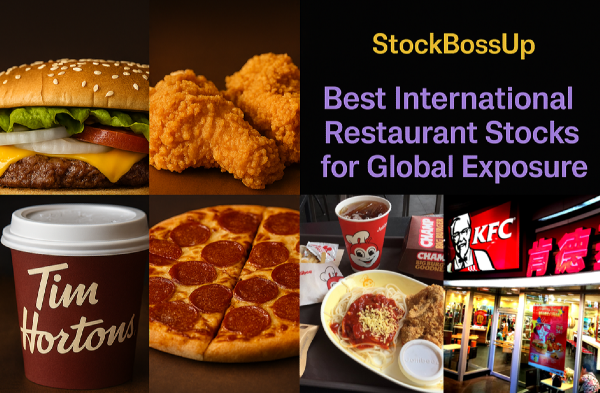
Investors often focus on U.S. restaurant stocks because they are familiar and easy to follow. But the global restaurant market is much larger than the U.S. alone. Many of the fastest‑growing brands now earn most of their revenue outside the country. This makes international restaurant stocks an important part of a diversified portfolio. They offer access to new customers, new food cultures, and rising middle‑class spending in fast‑growing regions.
This article explores some of the best international restaurant stocks for investors who want global exposure. These companies operate across Asia, Europe, Latin America, the Middle East, and Canada. They also run well‑known brands that continue to expand into new markets. The goal is to help you understand why these companies matter and how they fit into a long‑term strategy.
One of the biggest advantages of investing in international restaurant stocks is the ability to tap into markets where eating out is still growing. In many countries, restaurant spending rises as incomes rise. This creates a long runway for expansion. It also helps companies spread risk across many regions instead of relying on one economy.
Another benefit is brand power. Many global restaurant companies own multiple chains. This gives them flexibility to grow in different ways. Some brands work better in certain regions than others. A company with several brands can match each one to the right market.
Below, we break down several top international restaurant stocks. Each one brings something different to the table. Some focus on fast food. Others focus on coffee, chicken, or local flavors. All of them have strong global footprints and long‑term growth potential.
Why Global Exposure Matters
Investing in international restaurant stocks is not just about geography. It is about tapping into global consumer trends. People around the world are eating out more often. Delivery apps are expanding. Urbanization is rising. These trends support long‑term growth for restaurant operators.
Another reason global exposure matters is currency diversification. When a company earns revenue in many currencies, it reduces the impact of any single economic slowdown. This can help stabilize earnings over time.
There is also the benefit of cultural reach. Food brands that cross borders often become part of local culture. When a brand becomes a habit for millions of people, it gains pricing power and customer loyalty.
Finally, global restaurant companies often have strong supply chains. They can negotiate better deals with suppliers because of their size. This helps protect margins even when costs rise.
Read More: The Top Restaurant Stocks
Table 1: Key International Restaurant Stocks at a Glance
| Company |
Ticker |
Region Strength |
Primary Brands |
| Restaurant Brands International |
QSR |
Global |
Burger King, Tim Hortons, Popeyes, Firehouse Subs |
| Yum China |
YUMC |
China |
KFC, Pizza Hut, Lavazza China |
| Jollibee Foods Corporation |
JBFCF |
Asia, Middle East, U.S. |
Jollibee, Coffee Bean & Tea Leaf, Smashburger |
| Domino’s Pizza Enterprises |
DMZPY |
Australia, Europe, Asia |
Domino’s (international master franchise) |
| Alsea SAB de CV |
ALSSF |
Latin America, Europe |
Starbucks LATAM, Domino’s LATAM, Burger King LATAM |
Restaurant Brands International: A Global Powerhouse
Restaurant Brands International (RBI) is one of the largest restaurant companies in the world. Its ticker is QSR. The company owns Burger King, Tim Hortons, Popeyes, and Firehouse Subs. These brands operate in more than 100 countries. This gives RBI one of the widest footprints in the industry.
Burger King is the company’s largest brand. It has a strong presence in Europe, Latin America, and Asia. Many of its international markets are still growing. This gives the brand room to expand through new stores and digital channels.
Tim Hortons is a major coffee chain in Canada. It also has a growing presence in China and the Middle East. The company has been investing in digital ordering and delivery to reach more customers.
Popeyes has become a global growth engine. Its chicken sandwich helped the brand expand into new markets. Popeyes has opened stores in Europe, Asia, and Latin America. It continues to sign new international franchise deals.
One interesting fact about RBI is that Burger King once operated in space—sort of. A Whopper was sent to the edge of space during a marketing campaign, reaching over 100,000 feet before returning to Earth. This helped the brand gain global attention.
RBI’s strategy focuses on franchising. This keeps costs low and allows the company to grow quickly. Franchise partners invest in new stores while RBI collects royalties. This model has worked well for many global restaurant companies.
Yum China: A Leader in the World’s Largest Food Market
Yum China is one of the most important restaurant companies outside the U.S. Its ticker is YUMC. The company operates KFC, Pizza Hut, and several local brands across China. It also runs the China operations of Lavazza, the Italian coffee brand.
China is the world’s largest restaurant market. It has a growing middle class and a strong appetite for dining out. Yum China has been operating there for decades. This gives it deep knowledge of local tastes and consumer habits.
KFC is the company’s biggest brand. It has more than 9,000 stores in China. The menu includes items tailored to local tastes, such as spicy chicken, rice bowls, and seasonal dishes. This helps the brand stay relevant in a competitive market.
Pizza Hut in China is different from the U.S. version. It offers pasta, steak, and desserts. Many locations have a more upscale feel. This helps the brand appeal to families and young professionals.
Yum China also invests heavily in technology. It uses digital ordering, smart kitchens, and delivery automation. These tools help the company operate efficiently in a fast‑moving market.
Another unique fact is that KFC China once launched a robot‑run concept store. Customers ordered from a robot cashier, and the store used facial recognition for payment. This experiment showed how far ahead China is in food‑tech innovation.
Revenue Mix by Region (Approximate)
| Company |
Largest Market |
% of Revenue |
Secondary Markets |
| Restaurant Brands International |
Europe/Canada |
~55% |
Latin America, Asia |
| Yum China |
China |
~100% |
N/A |
| Jollibee Foods Corporation |
Philippines |
~55% |
U.S., Middle East |
| Domino’s Pizza Enterprises |
Australia |
~45% |
Japan, France, Germany |
| Alsea |
Mexico |
~35% |
Spain, Chile, Argentina |
Jollibee Foods Corporation: Asia’s Fast‑Growing Giant
Jollibee Foods Corporation is one of the most successful restaurant companies in Asia. Its ticker is JBFCF. The company started in the Philippines and has grown into a global brand. It now operates thousands of stores across Asia, the Middle East, Europe, and the United States.
Jollibee is known for its sweet‑style spaghetti, fried chicken, and peach mango pies. These menu items appeal to families and young customers. The brand has a loyal following in the Philippines and among Filipino communities worldwide.
The company also owns several other brands. These include Smashburger in the U.S. and Coffee Bean & Tea Leaf. This gives Jollibee a mix of fast food, coffee, and casual dining.
Jollibee has been expanding aggressively in North America. It has opened stores in major cities like New York, Los Angeles, and Toronto. Many locations attract long lines on opening day. This shows the brand’s growing appeal beyond its home market.
The company’s strategy focuses on mergers, acquisitions, and new store openings. It often buys brands that already have strong local followings. This helps Jollibee enter new markets faster.
Domino’s Pizza Enterprises: A Global Franchise Leader
Domino’s Pizza Enterprises (DPE) is not the U.S. Domino’s company. Instead, it is the largest international master franchisee. Its ticker is DMZPY. DPE operates Domino’s stores in Australia, New Zealand, Japan, France, Germany, and several other countries.
The company is known for its strong digital strategy. Many of its markets have high online ordering rates. This helps DPE operate efficiently and deliver food quickly.
Australia is the company’s largest market. Domino’s is one of the most popular pizza brands there. Japan is another major growth market. The company continues to open new stores and invest in delivery technology.
DPE benefits from the global strength of the Domino’s brand. It also adapts menus to local tastes. For example, Japan offers seafood pizzas, while France offers more gourmet toppings.
The company’s long‑term growth strategy focuses on store expansion and digital innovation. It aims to increase delivery speed and improve customer experience.
International Expansion Plans (Next 3–5 Years)
| Company |
Planned New Stores |
Key Regions |
| Restaurant Brands International |
1,500–2,000 |
Asia, Europe, Middle East |
| Yum China |
1,000+ |
Tier‑2 and Tier‑3 Chinese cities |
| Jollibee |
500+ |
U.S., Middle East, Southeast Asia |
| Domino’s Pizza Enterprises |
800+ |
Japan, France, Germany |
| Alsea |
300+ |
Mexico, Spain, Chile |
Alsea: A Major Operator in Latin America and Europe
Alsea is one of the largest restaurant operators in Latin America. Its ticker is ALSSF. The company runs brands like Starbucks, Domino’s, Burger King, and Chili’s across Mexico, Spain, Chile, and Argentina.
Alsea operates under franchise agreements. This means it does not own the brands but manages them in specific regions. This model allows the company to focus on operations and local market strategy.
Starbucks is one of Alsea’s strongest brands. It operates hundreds of Starbucks stores across Latin America. Many of these markets are still growing. Coffee culture continues to expand, especially among young adults.
Domino’s is another major brand for Alsea. The company has invested in delivery technology and digital ordering. This helps it compete in crowded urban markets.
Alsea’s strategy focuses on expanding in regions with rising middle‑class populations. It also invests in store upgrades and digital tools to improve customer experience.
What Makes These Companies Stand Out
Each of the companies listed above brings something unique to the global restaurant industry. Some focus on fast food. Others focus on coffee or local flavors. But they all share several strengths:
- Strong brand recognition
- Large international footprints
- Growth in emerging markets
- Digital ordering and delivery systems
- Franchise‑based expansion models
These strengths help them compete in a fast‑changing industry. They also give investors exposure to global consumer trends.
Another important factor is resilience. Global restaurant companies often recover faster from economic downturns. This is because they operate in many regions. When one market slows down, another may be growing.
Final Thoughts
International restaurant stocks offer a powerful way to diversify a portfolio. They provide access to global growth, rising consumer spending, and strong brand loyalty. Companies like Restaurant Brands International, Yum China, Jollibee, Domino’s Pizza Enterprises, and Alsea have proven track records of expansion and innovation.
These companies operate across dozens of countries. They adapt to local tastes while maintaining strong brand identities. Their global reach helps them stay competitive and grow over time.
For investors who want exposure beyond the U.S., these stocks offer a strong starting point. They combine global scale with long‑term growth potential. As more people around the world eat out, order delivery, and try new foods, these companies are well‑positioned to benefit.
If you want, I can also create a companion article that compares these companies by valuation, growth rate, or dividend strength.
⚡ Explore More
🏷️ Consumer Discretionary Sector
🍽️ Restaurant Industry — Core Overviews
📈 Performance & Financial Strength
🌍 Specialized & Global Categories
🚀 Ready to Deepen Your Research?
Unlock deeper insights, compare trends, and build a sharper investment strategy by exploring each topic above.
















🌍 Top International Restaurant Stocks (Ranked by Market Cap)
Notes
Investors often focus on U.S. restaurant stocks because they are familiar and easy to follow. But the global restaurant market is much larger than the U.S. alone. Many of the fastest‑growing brands now earn most of their revenue outside the country. This makes international restaurant stocks an important part of a diversified portfolio. They offer access to new customers, new food cultures, and rising middle‑class spending in fast‑growing regions.
This article explores some of the best international restaurant stocks for investors who want global exposure. These companies operate across Asia, Europe, Latin America, the Middle East, and Canada. They also run well‑known brands that continue to expand into new markets. The goal is to help you understand why these companies matter and how they fit into a long‑term strategy.
One of the biggest advantages of investing in international restaurant stocks is the ability to tap into markets where eating out is still growing. In many countries, restaurant spending rises as incomes rise. This creates a long runway for expansion. It also helps companies spread risk across many regions instead of relying on one economy.
Another benefit is brand power. Many global restaurant companies own multiple chains. This gives them flexibility to grow in different ways. Some brands work better in certain regions than others. A company with several brands can match each one to the right market.
Below, we break down several top international restaurant stocks. Each one brings something different to the table. Some focus on fast food. Others focus on coffee, chicken, or local flavors. All of them have strong global footprints and long‑term growth potential.
Why Global Exposure Matters
Investing in international restaurant stocks is not just about geography. It is about tapping into global consumer trends. People around the world are eating out more often. Delivery apps are expanding. Urbanization is rising. These trends support long‑term growth for restaurant operators.
Another reason global exposure matters is currency diversification. When a company earns revenue in many currencies, it reduces the impact of any single economic slowdown. This can help stabilize earnings over time.
There is also the benefit of cultural reach. Food brands that cross borders often become part of local culture. When a brand becomes a habit for millions of people, it gains pricing power and customer loyalty.
Finally, global restaurant companies often have strong supply chains. They can negotiate better deals with suppliers because of their size. This helps protect margins even when costs rise.
Table 1: Key International Restaurant Stocks at a Glance
Restaurant Brands International: A Global Powerhouse
Restaurant Brands International (RBI) is one of the largest restaurant companies in the world. Its ticker is QSR. The company owns Burger King, Tim Hortons, Popeyes, and Firehouse Subs. These brands operate in more than 100 countries. This gives RBI one of the widest footprints in the industry.
Burger King is the company’s largest brand. It has a strong presence in Europe, Latin America, and Asia. Many of its international markets are still growing. This gives the brand room to expand through new stores and digital channels.
Tim Hortons is a major coffee chain in Canada. It also has a growing presence in China and the Middle East. The company has been investing in digital ordering and delivery to reach more customers.
Popeyes has become a global growth engine. Its chicken sandwich helped the brand expand into new markets. Popeyes has opened stores in Europe, Asia, and Latin America. It continues to sign new international franchise deals.
One interesting fact about RBI is that Burger King once operated in space—sort of. A Whopper was sent to the edge of space during a marketing campaign, reaching over 100,000 feet before returning to Earth. This helped the brand gain global attention.
RBI’s strategy focuses on franchising. This keeps costs low and allows the company to grow quickly. Franchise partners invest in new stores while RBI collects royalties. This model has worked well for many global restaurant companies.
Yum China: A Leader in the World’s Largest Food Market
Yum China is one of the most important restaurant companies outside the U.S. Its ticker is YUMC. The company operates KFC, Pizza Hut, and several local brands across China. It also runs the China operations of Lavazza, the Italian coffee brand.
China is the world’s largest restaurant market. It has a growing middle class and a strong appetite for dining out. Yum China has been operating there for decades. This gives it deep knowledge of local tastes and consumer habits.
KFC is the company’s biggest brand. It has more than 9,000 stores in China. The menu includes items tailored to local tastes, such as spicy chicken, rice bowls, and seasonal dishes. This helps the brand stay relevant in a competitive market.
Pizza Hut in China is different from the U.S. version. It offers pasta, steak, and desserts. Many locations have a more upscale feel. This helps the brand appeal to families and young professionals.
Yum China also invests heavily in technology. It uses digital ordering, smart kitchens, and delivery automation. These tools help the company operate efficiently in a fast‑moving market.
Another unique fact is that KFC China once launched a robot‑run concept store. Customers ordered from a robot cashier, and the store used facial recognition for payment. This experiment showed how far ahead China is in food‑tech innovation.
Revenue Mix by Region (Approximate)
Jollibee Foods Corporation: Asia’s Fast‑Growing Giant
Jollibee Foods Corporation is one of the most successful restaurant companies in Asia. Its ticker is JBFCF. The company started in the Philippines and has grown into a global brand. It now operates thousands of stores across Asia, the Middle East, Europe, and the United States.
Jollibee is known for its sweet‑style spaghetti, fried chicken, and peach mango pies. These menu items appeal to families and young customers. The brand has a loyal following in the Philippines and among Filipino communities worldwide.
The company also owns several other brands. These include Smashburger in the U.S. and Coffee Bean & Tea Leaf. This gives Jollibee a mix of fast food, coffee, and casual dining.
Jollibee has been expanding aggressively in North America. It has opened stores in major cities like New York, Los Angeles, and Toronto. Many locations attract long lines on opening day. This shows the brand’s growing appeal beyond its home market.
The company’s strategy focuses on mergers, acquisitions, and new store openings. It often buys brands that already have strong local followings. This helps Jollibee enter new markets faster.
Domino’s Pizza Enterprises: A Global Franchise Leader
Domino’s Pizza Enterprises (DPE) is not the U.S. Domino’s company. Instead, it is the largest international master franchisee. Its ticker is DMZPY. DPE operates Domino’s stores in Australia, New Zealand, Japan, France, Germany, and several other countries.
The company is known for its strong digital strategy. Many of its markets have high online ordering rates. This helps DPE operate efficiently and deliver food quickly.
Australia is the company’s largest market. Domino’s is one of the most popular pizza brands there. Japan is another major growth market. The company continues to open new stores and invest in delivery technology.
DPE benefits from the global strength of the Domino’s brand. It also adapts menus to local tastes. For example, Japan offers seafood pizzas, while France offers more gourmet toppings.
The company’s long‑term growth strategy focuses on store expansion and digital innovation. It aims to increase delivery speed and improve customer experience.
International Expansion Plans (Next 3–5 Years)
Alsea: A Major Operator in Latin America and Europe
Alsea is one of the largest restaurant operators in Latin America. Its ticker is ALSSF. The company runs brands like Starbucks, Domino’s, Burger King, and Chili’s across Mexico, Spain, Chile, and Argentina.
Alsea operates under franchise agreements. This means it does not own the brands but manages them in specific regions. This model allows the company to focus on operations and local market strategy.
Starbucks is one of Alsea’s strongest brands. It operates hundreds of Starbucks stores across Latin America. Many of these markets are still growing. Coffee culture continues to expand, especially among young adults.
Domino’s is another major brand for Alsea. The company has invested in delivery technology and digital ordering. This helps it compete in crowded urban markets.
Alsea’s strategy focuses on expanding in regions with rising middle‑class populations. It also invests in store upgrades and digital tools to improve customer experience.
What Makes These Companies Stand Out
Each of the companies listed above brings something unique to the global restaurant industry. Some focus on fast food. Others focus on coffee or local flavors. But they all share several strengths:
These strengths help them compete in a fast‑changing industry. They also give investors exposure to global consumer trends.
Another important factor is resilience. Global restaurant companies often recover faster from economic downturns. This is because they operate in many regions. When one market slows down, another may be growing.
Final Thoughts
International restaurant stocks offer a powerful way to diversify a portfolio. They provide access to global growth, rising consumer spending, and strong brand loyalty. Companies like Restaurant Brands International, Yum China, Jollibee, Domino’s Pizza Enterprises, and Alsea have proven track records of expansion and innovation.
These companies operate across dozens of countries. They adapt to local tastes while maintaining strong brand identities. Their global reach helps them stay competitive and grow over time.
For investors who want exposure beyond the U.S., these stocks offer a strong starting point. They combine global scale with long‑term growth potential. As more people around the world eat out, order delivery, and try new foods, these companies are well‑positioned to benefit.
If you want, I can also create a companion article that compares these companies by valuation, growth rate, or dividend strength.
⚡ Explore More
🏷️ Consumer Discretionary Sector
🍽️ Restaurant Industry — Core Overviews
📈 Performance & Financial Strength
🌍 Specialized & Global Categories
🚀 Ready to Deepen Your Research?
Unlock deeper insights, compare trends, and build a sharper investment strategy by exploring each topic above.