🔑 Key Takeaways: Comparing Aftermarket vs OEM Auto Parts Business Models
🚗 OEM parts win on trust, pricing power, and brand control
OEM auto parts are backed by vehicle manufacturers, which gives them strong credibility in the market. Customers are willing to pay higher prices because they trust factory-approved quality and consistency. This allows OEM businesses to maintain stronger pricing power, especially in newer vehicles and dealership-driven repair networks. However, this model depends heavily on strict supply chains and long-term automaker contracts, which can limit flexibility.
💰 Aftermarket parts scale faster but face intense competition
Aftermarket auto parts companies grow by offering lower prices, wider product variety, and faster availability. They are not tied to one automaker, which allows them to serve multiple vehicle brands at once. This flexibility supports rapid scaling, especially through e-commerce and global distribution. However, the tradeoff is heavy competition, thin margins in many segments, and constant pressure to differentiate through quality, speed, or branding.
📦 Inventory and supply chains determine long-term success
The biggest operational difference between OEM and aftermarket businesses is inventory complexity. OEM companies manage smaller, more controlled product lines, while aftermarket firms handle thousands of SKUs across decades of vehicle models. This makes forecasting, warehousing, and logistics far more difficult for aftermarket businesses. Companies that optimize supply chains, reduce delays, and improve inventory accuracy gain a major competitive advantage in both models.
⚡ EV growth and e-commerce are reshaping the entire industry
Electric vehicles are reducing demand for traditional engine-related parts while increasing demand for electronics, batteries, and software-driven components. At the same time, e-commerce has transformed how parts are bought and sold, increasing price transparency and competition. Businesses that adapt to EV technology and invest in digital distribution channels are positioned to outperform those relying on traditional dealership or warehouse-only models.
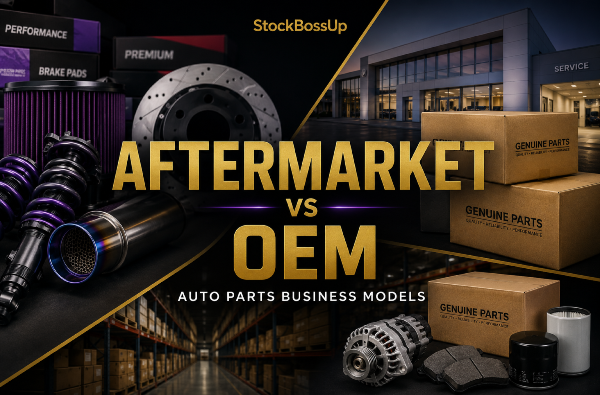
Comparing Aftermarket vs OEM Auto Parts Business Models
The auto parts industry is changing fast. Electric vehicles are entering the market. Repair costs are climbing. Online sales are reshaping how drivers shop for parts. Yet one question continues to divide mechanics, distributors, investors, and car owners alike.
Should businesses focus on aftermarket auto parts or OEM auto parts?
At first glance, the answer seems simple. OEM parts offer trust and precision. Aftermarket parts offer lower prices and wider choices. But many companies that enter the industry discover a deeper issue. The business model that looks stronger on paper does not always produce the best long-term profits.
Some OEM-focused businesses struggle with high inventory costs and strict supplier rules. Meanwhile, some aftermarket companies grow quickly but face intense competition and razor-thin margins. The real challenge is understanding how each model makes money, manages risk, and scales over time.
The answer becomes clearer only after looking at supply chains, customer behavior, pricing power, technology, and market trends together.
Why Are Auto Parts Businesses Growing So Quickly?
The global vehicle market continues to expand. Cars are staying on the road longer than ever before. In the United States, the average vehicle age now exceeds 12 years. Older vehicles need more repairs, replacement parts, and maintenance services.
That trend has created strong demand across both OEM and aftermarket segments.
OEM parts come directly from vehicle manufacturers or approved suppliers. These parts match factory specifications exactly. Drivers often buy them through dealerships or certified repair centers.
Aftermarket parts are produced by third-party companies. Some are designed to match OEM quality. Others focus on lower prices or performance upgrades.
Both business models serve huge markets, but they operate in very different ways.
A dealership selling OEM brake pads depends heavily on brand trust and manufacturer relationships. An aftermarket supplier may compete mainly on price, speed, and product variety.
That difference changes everything from marketing costs to profit margins.
| Feature |
OEM Parts |
Aftermarket Parts |
| Source |
Vehicle manufacturer or approved supplier |
Third-party manufacturer |
| Average Price |
Higher |
Lower |
| Warranty Support |
Usually stronger |
Varies by brand |
| Product Variety |
Limited |
Very broad |
| Availability |
Dealer-focused |
Widely available |
| Customization Options |
Minimal |
Extensive |
OEM companies also benefit from customer loyalty. Drivers who trust a specific car brand often prefer parts connected to that same brand.
Still, high prices can create problems during economic downturns. Many consumers shift toward cheaper alternatives when repair bills rise.
What Makes OEM Auto Parts So Expensive?
OEM parts usually cost more because of branding, testing, certification, and controlled distribution networks.
Automakers spend billions developing vehicles. They want replacement parts to maintain the same quality and performance standards. Because of that, OEM suppliers must follow strict production requirements.
These parts also move through dealership networks that add additional markups.
For example, a dealership may source an OEM alternator from a manufacturer-approved supplier. The part passes through warehousing, distribution, and dealership inventory systems before reaching the customer.
Each layer adds cost.
Customers often accept the higher price because OEM parts reduce uncertainty. Many drivers believe factory-approved parts protect resale value and reliability.
That belief gives OEM businesses stronger pricing power.
Why Do Aftermarket Companies Compete So Aggressively?
The aftermarket business model depends on flexibility and scale.
Unlike OEM suppliers, aftermarket companies can produce compatible parts for many vehicle brands at once. This creates broader revenue opportunities.
A single aftermarket manufacturer may sell filters, brake systems, suspension parts, and lighting components across dozens of car brands.
That flexibility lowers dependence on one automaker.
It also creates fierce competition.
Thousands of aftermarket brands compete globally. Some focus on premium quality. Others target budget buyers. Many specialize in performance upgrades or niche vehicle categories.
Because entry barriers are lower, pricing pressure becomes intense.
Online marketplaces have accelerated this competition even more. Consumers can now compare hundreds of products within seconds.
As a result, successful aftermarket companies often focus on one of three strategies:
- Low-cost production
- Premium performance branding
- Fast distribution and availability
Businesses that fail to differentiate themselves usually struggle.
How Does Inventory Management Change Everything?
Inventory management is one of the biggest differences between these business models.
OEM suppliers typically manage smaller product ranges tied to specific vehicle platforms. Their inventory systems prioritize accuracy and manufacturer compliance.
Aftermarket businesses face a different challenge entirely.
They may carry thousands of SKUs covering decades of vehicle models. Managing that inventory requires advanced forecasting and supply chain coordination.
One warehouse mistake can create major losses.
For example, stocking too many slow-moving parts ties up capital. Stocking too few fast-moving parts frustrates customers and reduces sales.
Some aftermarket distributors now use AI-powered demand forecasting to improve inventory efficiency.
A large percentage of aftermarket sales also depend on quick delivery. Repair shops often need parts immediately. Delays can force customers to choose competitors.
That pressure has pushed many companies toward regional warehouse networks and same-day shipping strategies.
| Inventory Factor |
OEM Model |
Aftermarket Model |
| SKU Count |
Lower |
Much higher |
| Forecast Complexity |
Moderate |
High |
| Inventory Risk |
Lower |
Higher |
| Distribution Speed Pressure |
Moderate |
Extreme |
| Supplier Flexibility |
Limited |
Broad |
One interesting industry shift involves 3D printing technology. Some aftermarket suppliers are experimenting with on-demand part production for low-volume components. That could eventually reduce warehousing costs dramatically.
Why Do Profit Margins Vary So Much?
Profit margins differ sharply between OEM and aftermarket businesses.
OEM suppliers often enjoy higher margins because of brand trust and controlled distribution channels. Customers pay premiums for perceived reliability.
However, OEM businesses also face strict production standards and long-term contracts that can limit flexibility.
Aftermarket companies may sell at lower margins per item, but they often generate higher volume.
The balance between volume and margin determines profitability.
For example:
- OEM suppliers may earn strong profits from fewer sales.
- Aftermarket companies may rely on massive sales volumes to stay competitive.
Brand strength matters heavily in the aftermarket world.
Premium aftermarket brands can sometimes charge prices close to OEM levels. Performance-focused customers are often willing to pay extra for upgraded features.
Meanwhile, low-cost aftermarket suppliers may operate on extremely thin margins.
This creates a highly fragmented market where some companies thrive while others disappear quickly.
Why Do Repair Shops Prefer Certain Parts?
Repair shops play a major role in shaping the industry.
Some shops prefer OEM parts because they reduce warranty risks and installation issues. If a customer experiences problems later, the shop can point to factory-approved components.
Other repair businesses prioritize affordability and availability.
Independent repair shops often use aftermarket parts because customers want lower repair costs.
Speed also matters.
If an aftermarket distributor can deliver parts within hours while an OEM dealership requires several days, many repair shops will choose the faster option.
That delivery advantage has become one of the aftermarket industry's biggest strengths.
Interestingly, many drivers do not realize that some OEM parts and aftermarket parts come from the same factory. The manufacturer may produce identical components under different branding arrangements.
The label changes, but the production source may not.
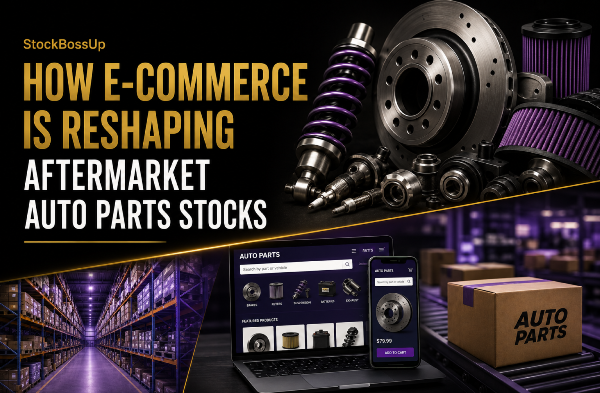
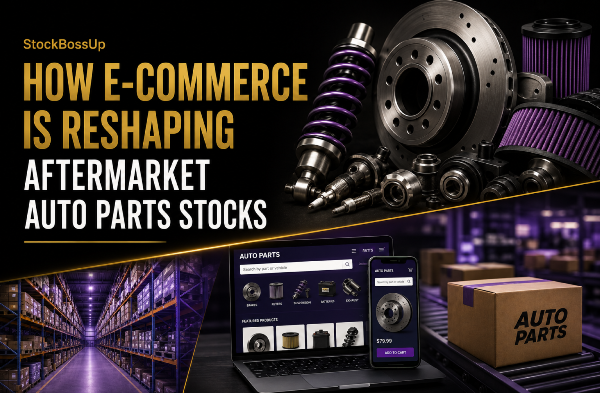
How Is E-Commerce Reshaping the Industry?
Online sales have transformed both business models.
Years ago, many consumers relied almost entirely on dealerships and local repair shops. Today, drivers compare prices, reviews, and compatibility online before making purchases.
That shift has helped aftermarket companies grow rapidly.
E-commerce platforms allow smaller suppliers to reach national and global audiences. Digital marketing has become essential for visibility.
Search engine optimization, online reviews, and marketplace rankings now influence sales heavily.
OEM businesses have adapted more slowly in some areas because dealership networks still dominate distribution.
However, automakers are increasingly investing in direct-to-consumer online platforms.
| E-Commerce Factor |
OEM Businesses |
Aftermarket Businesses |
| Online Competition |
Moderate |
Very intense |
| Price Transparency |
Growing |
Extremely high |
| Marketplace Dependence |
Lower |
Higher |
| Customer Reviews Impact |
Important |
Critical |
| Shipping Speed Importance |
High |
Very high |
Online returns also create major operational challenges.
A customer ordering the wrong aftermarket part can trigger expensive reverse logistics costs. Compatibility databases must stay accurate to reduce these problems.
Why Are Supply Chains Becoming More Difficult?
Supply chain disruptions have changed the economics of the auto parts industry.
Global shortages, shipping delays, and rising material costs have affected both OEM and aftermarket businesses.
OEM suppliers often depend on tightly controlled manufacturing systems. A single missing component can delay production.
Aftermarket companies sometimes adapt more quickly because they work with broader supplier networks.
Still, flexibility does not eliminate risk.
Metal prices, semiconductor shortages, and transportation costs continue to pressure margins across the industry.
Geopolitical tensions have also increased supply chain uncertainty.
Many companies are now diversifying manufacturing locations to reduce dependence on single regions.
This shift is expensive in the short term but may improve long-term resilience.
Why Are Electric Vehicles Changing the Business Model?
Electric vehicles are reshaping the future of auto parts.
EVs require fewer moving parts than traditional gas-powered vehicles. They do not need oil changes, many engine components, or complex exhaust systems.
That creates challenges for some aftermarket businesses.
Companies focused heavily on engine maintenance products may face shrinking demand over time.
However, new opportunities are emerging.
Battery systems, charging hardware, thermal management systems, and advanced electronics are becoming major growth areas.
OEM manufacturers currently hold strong advantages in EV technology because of proprietary systems and software integration.
Aftermarket suppliers are working to catch up.
The transition may create one of the largest competitive shifts the industry has seen in decades.
| EV Impact Area |
OEM Advantage |
Aftermarket Opportunity |
| Software Integration |
Strong |
Limited but growing |
| Battery Systems |
Dominant |
Emerging market |
| Traditional Engine Parts |
Declining |
Declining |
| Performance Upgrades |
Moderate |
Growing |
| Charging Equipment |
Expanding |
Expanding |
Some analysts believe EV adoption could reduce total replacement part demand over the long run. Yet newer technologies may also create entirely new categories of aftermarket products.
Why Do Branding and Trust Matter So Much?
Trust drives buying decisions in the auto parts market.
A driver replacing brake components or steering systems wants confidence that the vehicle will remain safe.
OEM brands benefit naturally from manufacturer recognition.
Aftermarket brands must earn trust through reviews, warranties, certifications, and performance history.
This creates major marketing differences.
OEM businesses rely heavily on dealership relationships and automaker branding. Aftermarket companies invest more aggressively in advertising, sponsorships, online visibility, and influencer marketing.
Performance car culture has played a major role in aftermarket branding growth.
Many enthusiasts actively seek aftermarket upgrades because they want better performance than factory parts provide.
That emotional connection can create strong customer loyalty.
What Risks Do Investors Often Miss?
Many investors focus only on sales growth. That can be misleading.
The real strength of an auto parts business often depends on operational efficiency, supplier relationships, and inventory management.
OEM suppliers face concentration risk. Losing a major automaker contract can hurt revenue badly.
Aftermarket companies face pricing pressure and market saturation.
Counterfeit products also create industry-wide problems. Fake parts damage consumer trust and can create safety risks.
Another overlooked issue involves vehicle complexity.
Modern vehicles increasingly rely on software integration and proprietary systems. That trend could strengthen OEM control over future repairs and replacement parts.
Governments are debating right-to-repair laws partly because of these concerns.
The outcome could shape the future balance between OEM and aftermarket businesses.
Which Business Model Has Better Long-Term Potential?
The answer depends on market conditions and execution.
OEM businesses often provide stability, strong branding, and higher pricing power. They work especially well in newer vehicle markets and advanced technology segments.
Aftermarket businesses offer flexibility, broader customer reach, and faster adaptation to changing trends.
Neither model guarantees success.
Some of the strongest companies combine elements of both.
They may supply OEM components while also selling aftermarket products under separate brands. This hybrid strategy spreads risk and expands revenue sources.
The biggest long-term winners will likely focus on several core strengths:
- Strong logistics networks
- Smart inventory systems
- Reliable product quality
- Digital sales capabilities
- Adaptation to EV technology
- Customer trust
Earlier, the article introduced a deeper problem hidden beneath the OEM-versus-aftermarket debate.
The real issue is not simply which parts cost more or which products sell faster.
It is which companies can adapt as vehicles, technology, and consumer expectations continue changing.
The businesses that survive the next decade may not be the cheapest or the largest today. They will likely be the ones that learn how to balance trust, speed, pricing, and innovation at the same time.
That balance is far harder to achieve than most companies expect.







🔑 Key Takeaways: Comparing Aftermarket vs OEM Auto Parts Business Models
🚗 OEM parts win on trust, pricing power, and brand control
OEM auto parts are backed by vehicle manufacturers, which gives them strong credibility in the market. Customers are willing to pay higher prices because they trust factory-approved quality and consistency. This allows OEM businesses to maintain stronger pricing power, especially in newer vehicles and dealership-driven repair networks. However, this model depends heavily on strict supply chains and long-term automaker contracts, which can limit flexibility.
💰 Aftermarket parts scale faster but face intense competition
Aftermarket auto parts companies grow by offering lower prices, wider product variety, and faster availability. They are not tied to one automaker, which allows them to serve multiple vehicle brands at once. This flexibility supports rapid scaling, especially through e-commerce and global distribution. However, the tradeoff is heavy competition, thin margins in many segments, and constant pressure to differentiate through quality, speed, or branding.
📦 Inventory and supply chains determine long-term success
The biggest operational difference between OEM and aftermarket businesses is inventory complexity. OEM companies manage smaller, more controlled product lines, while aftermarket firms handle thousands of SKUs across decades of vehicle models. This makes forecasting, warehousing, and logistics far more difficult for aftermarket businesses. Companies that optimize supply chains, reduce delays, and improve inventory accuracy gain a major competitive advantage in both models.
⚡ EV growth and e-commerce are reshaping the entire industry
Electric vehicles are reducing demand for traditional engine-related parts while increasing demand for electronics, batteries, and software-driven components. At the same time, e-commerce has transformed how parts are bought and sold, increasing price transparency and competition. Businesses that adapt to EV technology and invest in digital distribution channels are positioned to outperform those relying on traditional dealership or warehouse-only models.
Comparing Aftermarket vs OEM Auto Parts Business Models
The auto parts industry is changing fast. Electric vehicles are entering the market. Repair costs are climbing. Online sales are reshaping how drivers shop for parts. Yet one question continues to divide mechanics, distributors, investors, and car owners alike.
Should businesses focus on aftermarket auto parts or OEM auto parts?
At first glance, the answer seems simple. OEM parts offer trust and precision. Aftermarket parts offer lower prices and wider choices. But many companies that enter the industry discover a deeper issue. The business model that looks stronger on paper does not always produce the best long-term profits.
Some OEM-focused businesses struggle with high inventory costs and strict supplier rules. Meanwhile, some aftermarket companies grow quickly but face intense competition and razor-thin margins. The real challenge is understanding how each model makes money, manages risk, and scales over time.
The answer becomes clearer only after looking at supply chains, customer behavior, pricing power, technology, and market trends together.
Why Are Auto Parts Businesses Growing So Quickly?
The global vehicle market continues to expand. Cars are staying on the road longer than ever before. In the United States, the average vehicle age now exceeds 12 years. Older vehicles need more repairs, replacement parts, and maintenance services.
That trend has created strong demand across both OEM and aftermarket segments.
OEM parts come directly from vehicle manufacturers or approved suppliers. These parts match factory specifications exactly. Drivers often buy them through dealerships or certified repair centers.
Aftermarket parts are produced by third-party companies. Some are designed to match OEM quality. Others focus on lower prices or performance upgrades.
Both business models serve huge markets, but they operate in very different ways.
A dealership selling OEM brake pads depends heavily on brand trust and manufacturer relationships. An aftermarket supplier may compete mainly on price, speed, and product variety.
That difference changes everything from marketing costs to profit margins.
OEM companies also benefit from customer loyalty. Drivers who trust a specific car brand often prefer parts connected to that same brand.
Still, high prices can create problems during economic downturns. Many consumers shift toward cheaper alternatives when repair bills rise.
What Makes OEM Auto Parts So Expensive?
OEM parts usually cost more because of branding, testing, certification, and controlled distribution networks.
Automakers spend billions developing vehicles. They want replacement parts to maintain the same quality and performance standards. Because of that, OEM suppliers must follow strict production requirements.
These parts also move through dealership networks that add additional markups.
For example, a dealership may source an OEM alternator from a manufacturer-approved supplier. The part passes through warehousing, distribution, and dealership inventory systems before reaching the customer.
Each layer adds cost.
Customers often accept the higher price because OEM parts reduce uncertainty. Many drivers believe factory-approved parts protect resale value and reliability.
That belief gives OEM businesses stronger pricing power.
Why Do Aftermarket Companies Compete So Aggressively?
The aftermarket business model depends on flexibility and scale.
Unlike OEM suppliers, aftermarket companies can produce compatible parts for many vehicle brands at once. This creates broader revenue opportunities.
A single aftermarket manufacturer may sell filters, brake systems, suspension parts, and lighting components across dozens of car brands.
That flexibility lowers dependence on one automaker.
It also creates fierce competition.
Thousands of aftermarket brands compete globally. Some focus on premium quality. Others target budget buyers. Many specialize in performance upgrades or niche vehicle categories.
Because entry barriers are lower, pricing pressure becomes intense.
Online marketplaces have accelerated this competition even more. Consumers can now compare hundreds of products within seconds.
As a result, successful aftermarket companies often focus on one of three strategies:
Businesses that fail to differentiate themselves usually struggle.
How Does Inventory Management Change Everything?
Inventory management is one of the biggest differences between these business models.
OEM suppliers typically manage smaller product ranges tied to specific vehicle platforms. Their inventory systems prioritize accuracy and manufacturer compliance.
Aftermarket businesses face a different challenge entirely.
They may carry thousands of SKUs covering decades of vehicle models. Managing that inventory requires advanced forecasting and supply chain coordination.
One warehouse mistake can create major losses.
For example, stocking too many slow-moving parts ties up capital. Stocking too few fast-moving parts frustrates customers and reduces sales.
Some aftermarket distributors now use AI-powered demand forecasting to improve inventory efficiency.
A large percentage of aftermarket sales also depend on quick delivery. Repair shops often need parts immediately. Delays can force customers to choose competitors.
That pressure has pushed many companies toward regional warehouse networks and same-day shipping strategies.
One interesting industry shift involves 3D printing technology. Some aftermarket suppliers are experimenting with on-demand part production for low-volume components. That could eventually reduce warehousing costs dramatically.
Why Do Profit Margins Vary So Much?
Profit margins differ sharply between OEM and aftermarket businesses.
OEM suppliers often enjoy higher margins because of brand trust and controlled distribution channels. Customers pay premiums for perceived reliability.
However, OEM businesses also face strict production standards and long-term contracts that can limit flexibility.
Aftermarket companies may sell at lower margins per item, but they often generate higher volume.
The balance between volume and margin determines profitability.
For example:
Brand strength matters heavily in the aftermarket world.
Premium aftermarket brands can sometimes charge prices close to OEM levels. Performance-focused customers are often willing to pay extra for upgraded features.
Meanwhile, low-cost aftermarket suppliers may operate on extremely thin margins.
This creates a highly fragmented market where some companies thrive while others disappear quickly.
Why Do Repair Shops Prefer Certain Parts?
Repair shops play a major role in shaping the industry.
Some shops prefer OEM parts because they reduce warranty risks and installation issues. If a customer experiences problems later, the shop can point to factory-approved components.
Other repair businesses prioritize affordability and availability.
Independent repair shops often use aftermarket parts because customers want lower repair costs.
Speed also matters.
If an aftermarket distributor can deliver parts within hours while an OEM dealership requires several days, many repair shops will choose the faster option.
That delivery advantage has become one of the aftermarket industry's biggest strengths.
Interestingly, many drivers do not realize that some OEM parts and aftermarket parts come from the same factory. The manufacturer may produce identical components under different branding arrangements.
The label changes, but the production source may not.
How Is E-Commerce Reshaping the Industry?
Online sales have transformed both business models.
Years ago, many consumers relied almost entirely on dealerships and local repair shops. Today, drivers compare prices, reviews, and compatibility online before making purchases.
That shift has helped aftermarket companies grow rapidly.
E-commerce platforms allow smaller suppliers to reach national and global audiences. Digital marketing has become essential for visibility.
Search engine optimization, online reviews, and marketplace rankings now influence sales heavily.
OEM businesses have adapted more slowly in some areas because dealership networks still dominate distribution.
However, automakers are increasingly investing in direct-to-consumer online platforms.
Online returns also create major operational challenges.
A customer ordering the wrong aftermarket part can trigger expensive reverse logistics costs. Compatibility databases must stay accurate to reduce these problems.
Why Are Supply Chains Becoming More Difficult?
Supply chain disruptions have changed the economics of the auto parts industry.
Global shortages, shipping delays, and rising material costs have affected both OEM and aftermarket businesses.
OEM suppliers often depend on tightly controlled manufacturing systems. A single missing component can delay production.
Aftermarket companies sometimes adapt more quickly because they work with broader supplier networks.
Still, flexibility does not eliminate risk.
Metal prices, semiconductor shortages, and transportation costs continue to pressure margins across the industry.
Geopolitical tensions have also increased supply chain uncertainty.
Many companies are now diversifying manufacturing locations to reduce dependence on single regions.
This shift is expensive in the short term but may improve long-term resilience.
Why Are Electric Vehicles Changing the Business Model?
Electric vehicles are reshaping the future of auto parts.
EVs require fewer moving parts than traditional gas-powered vehicles. They do not need oil changes, many engine components, or complex exhaust systems.
That creates challenges for some aftermarket businesses.
Companies focused heavily on engine maintenance products may face shrinking demand over time.
However, new opportunities are emerging.
Battery systems, charging hardware, thermal management systems, and advanced electronics are becoming major growth areas.
OEM manufacturers currently hold strong advantages in EV technology because of proprietary systems and software integration.
Aftermarket suppliers are working to catch up.
The transition may create one of the largest competitive shifts the industry has seen in decades.
Some analysts believe EV adoption could reduce total replacement part demand over the long run. Yet newer technologies may also create entirely new categories of aftermarket products.
Why Do Branding and Trust Matter So Much?
Trust drives buying decisions in the auto parts market.
A driver replacing brake components or steering systems wants confidence that the vehicle will remain safe.
OEM brands benefit naturally from manufacturer recognition.
Aftermarket brands must earn trust through reviews, warranties, certifications, and performance history.
This creates major marketing differences.
OEM businesses rely heavily on dealership relationships and automaker branding. Aftermarket companies invest more aggressively in advertising, sponsorships, online visibility, and influencer marketing.
Performance car culture has played a major role in aftermarket branding growth.
Many enthusiasts actively seek aftermarket upgrades because they want better performance than factory parts provide.
That emotional connection can create strong customer loyalty.
What Risks Do Investors Often Miss?
Many investors focus only on sales growth. That can be misleading.
The real strength of an auto parts business often depends on operational efficiency, supplier relationships, and inventory management.
OEM suppliers face concentration risk. Losing a major automaker contract can hurt revenue badly.
Aftermarket companies face pricing pressure and market saturation.
Counterfeit products also create industry-wide problems. Fake parts damage consumer trust and can create safety risks.
Another overlooked issue involves vehicle complexity.
Modern vehicles increasingly rely on software integration and proprietary systems. That trend could strengthen OEM control over future repairs and replacement parts.
Governments are debating right-to-repair laws partly because of these concerns.
The outcome could shape the future balance between OEM and aftermarket businesses.
Which Business Model Has Better Long-Term Potential?
The answer depends on market conditions and execution.
OEM businesses often provide stability, strong branding, and higher pricing power. They work especially well in newer vehicle markets and advanced technology segments.
Aftermarket businesses offer flexibility, broader customer reach, and faster adaptation to changing trends.
Neither model guarantees success.
Some of the strongest companies combine elements of both.
They may supply OEM components while also selling aftermarket products under separate brands. This hybrid strategy spreads risk and expands revenue sources.
The biggest long-term winners will likely focus on several core strengths:
Earlier, the article introduced a deeper problem hidden beneath the OEM-versus-aftermarket debate.
The real issue is not simply which parts cost more or which products sell faster.
It is which companies can adapt as vehicles, technology, and consumer expectations continue changing.
The businesses that survive the next decade may not be the cheapest or the largest today. They will likely be the ones that learn how to balance trust, speed, pricing, and innovation at the same time.
That balance is far harder to achieve than most companies expect.