Key Takeaways: How Aftermarket Suppliers Influence OEM Pricing Power
🚘 Aftermarket Suppliers Can Limit OEM Pricing Power by Expanding Consumer Choice
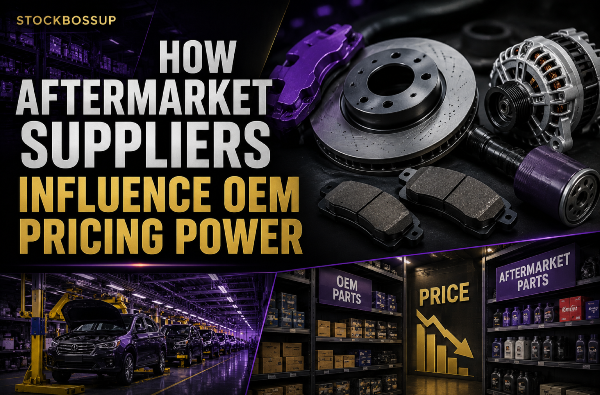
Aftermarket auto parts companies reduce automaker pricing control by offering lower-cost alternatives to factory replacement parts. Independent repair shops and online retailers give consumers more flexibility when choosing brakes, batteries, sensors, and other components. As aftermarket quality improves, many drivers become more comfortable avoiding dealership service departments, which increases competitive pressure on OEM pricing strategies.
🔧 Vehicle Software and Advanced Technology Are Helping OEMs Regain Control
Modern vehicles rely heavily on software systems, sensors, connected technology, and advanced diagnostics. Many repairs now require factory-approved tools and software access, making it harder for independent repair shops to compete. This shift gives automakers more control over repairs, subscriptions, and replacement parts pricing. The rise of electric vehicles could strengthen this trend even further in the years ahead.
📦 Distribution Speed and Repair Shop Relationships Shape the Entire Industry
Large aftermarket suppliers built powerful logistics networks that allow repair shops to receive parts quickly, sometimes within hours. Fast delivery and reliable inventory systems help aftermarket companies compete directly with dealership service departments. Independent mechanics also influence customer trust, often recommending quality aftermarket products that weaken OEM pricing advantages over time.
💰 Customer Trust Ultimately Decides Whether OEMs or Aftermarket Brands Hold Pricing Power
Consumers who prioritize factory certification, warranties, and brand reputation often support higher OEM pricing. Drivers focused on affordability and repair flexibility tend to choose aftermarket alternatives instead. The balance between trust, convenience, pricing, and technology access will continue shaping how automakers and aftermarket suppliers compete for long-term control of the vehicle repair market.
How Aftermarket Suppliers Influence OEM Pricing Power
Car buyers often blame automakers when vehicle prices rise. They see higher sticker prices, expensive repairs, and rising maintenance bills. But many people overlook another force shaping the market behind the scenes.
Aftermarket suppliers have quietly changed how original equipment manufacturers, or OEMs, price vehicles, replacement parts, and service packages. In some cases, aftermarket competition pressures automakers to lower prices. In other cases, it gives OEMs even more pricing power.
That creates a confusing problem for investors, repair shops, and consumers. Why do some automakers lose pricing control while others keep raising prices year after year?
The answer involves supply chains, brand trust, repair complexity, and customer behavior. But the real reason becomes clearer only after looking at how aftermarket suppliers slowly changed the auto industry over decades.
Why Do OEMs Care So Much About Aftermarket Suppliers?
OEMs make vehicles and factory-approved replacement parts. These companies include major automakers like Ford, Toyota, General Motors, and BMW.
Aftermarket suppliers produce replacement parts outside the original manufacturer network. These companies sell everything from brake pads to headlights and sensors.
At first glance, aftermarket suppliers may seem like a small side business. But they influence billions of dollars in vehicle repair spending each year.
Automakers care because repair and service operations generate high profit margins. In many cases, service departments make more money than new vehicle sales.
When aftermarket companies offer lower-cost alternatives, OEMs face pricing pressure.
Consumers suddenly have options.
Instead of paying dealership prices for a replacement alternator, battery, or suspension component, drivers may choose cheaper aftermarket parts.
That reduces the automaker’s control over repair pricing.
Still, the relationship is more complicated than simple competition.
Why Does Brand Trust Give OEMs Pricing Power?
Many consumers believe factory parts are safer or more reliable.
That belief helps OEMs charge premium prices for original replacement components.
Dealerships also reinforce this message during repairs and maintenance visits. Customers often hear phrases like:
- Genuine factory parts
- OEM-certified repairs
- Manufacturer-approved components
These terms create trust.
For luxury brands, trust becomes even more important. Drivers spending large amounts on premium vehicles may avoid aftermarket parts entirely.
That gives automakers stronger pricing power.
However, aftermarket suppliers have improved quality over time. Some manufacturers now produce parts equal to or better than OEM versions.
This has slowly weakened the pricing advantage held by automakers in certain categories.
| Factor |
OEM Advantage |
Aftermarket Advantage |
| Brand Trust |
Strong |
Improving |
| Pricing |
Higher margins |
Lower prices |
| Warranty Coverage |
Often included |
Limited in some cases |
| Part Availability |
Dealer network |
Wider retail access |
| Product Variety |
Limited options |
Broad selection |
How Did Aftermarket Suppliers Become So Powerful?
The aftermarket industry grew rapidly as vehicles became more common and stayed on roads longer.
Older vehicles created demand for affordable repairs.
Drivers often avoided dealership service centers once factory warranties expired. Independent repair shops became more popular because they usually charged lower labor rates.
That shift helped aftermarket suppliers expand.
Large companies built massive distribution systems across North America, Europe, and Asia.
Retail chains and online sellers also changed buying habits. Consumers gained easier access to replacement parts without visiting dealerships.
One hidden advantage helped aftermarket suppliers grow even faster. Many aftermarket companies reverse-engineered OEM parts and improved weak designs that commonly failed.
That gave repair shops cheaper and sometimes stronger alternatives.
Today, some aftermarket suppliers operate global logistics systems that rival major automakers.
Why Do Automakers Sometimes Benefit From Aftermarket Competition?
This seems backward at first.
If aftermarket suppliers lower repair prices, why would OEMs benefit?
The answer involves vehicle sales.
Affordable repairs can help maintain resale values and reduce ownership costs. Lower ownership costs may encourage consumers to buy certain vehicle brands.
Automakers know that expensive maintenance can scare away future buyers.
Strong aftermarket ecosystems may actually support vehicle demand over time.
This is especially true for trucks, SUVs, and performance vehicles with loyal customer communities.
Some automakers indirectly benefit from thriving aftermarket support because it increases long-term brand engagement.
A large aftermarket network can also extend the lifespan of vehicles. That keeps brand visibility high on roads for many years.
Why Are Repair Restrictions Increasing OEM Pricing Power Again?
Modern vehicles are becoming harder to repair.
Advanced electronics, software systems, sensors, and connected technologies now control major vehicle functions.
This creates a new challenge for aftermarket suppliers.
Some repairs require factory software tools or direct access to vehicle systems. Independent repair shops may struggle to complete these jobs without OEM support.
That shifts pricing power back toward automakers.
Subscription-based vehicle software has also changed the market. Some automakers now lock features behind digital systems controlled by the manufacturer.
This creates ongoing revenue opportunities.
Consumers may eventually pay monthly fees for features once included in the purchase price.
| Technology Shift |
Impact on OEM Pricing Power |
| Advanced sensors |
Higher repair complexity |
| Vehicle software systems |
Greater factory control |
| Connected car data |
More subscription revenue |
| Proprietary diagnostics |
Harder aftermarket access |
| Over-the-air updates |
Increased OEM influence |
Why Do Independent Repair Shops Matter So Much?
Independent repair shops are critical to the aftermarket industry.
These businesses connect suppliers with consumers.
Without repair shops, many aftermarket companies would struggle to compete with dealership service departments.
Independent mechanics often influence customer decisions about replacement parts.
If a trusted mechanic recommends a quality aftermarket brake system over a factory version, many customers follow that advice.
This weakens OEM pricing power.
Repair shops also help normalize aftermarket brands.
Over time, repeat customer experiences build confidence in non-OEM products.
Some repair chains now operate at large scale with sophisticated inventory systems and nationwide networks.
That gives aftermarket suppliers stronger distribution and marketing support.
One major warehouse distributor can sometimes supply thousands of repair shops within a single region overnight.
How Does Vehicle Complexity Change the Balance of Power?
Simple mechanical repairs once created easy opportunities for aftermarket companies.
Modern vehicles are different.
Many cars now contain:
- Radar systems
- Cameras
- Touchscreen controls
- Battery management systems
- Advanced driver assistance technology
These systems often require calibration after repairs.
That process may need factory-approved software or specialized equipment.
As vehicles become more digital, automakers gain more control over repairs and replacement parts.
This could increase OEM pricing power over time.
Still, aftermarket suppliers are adapting.
Some companies now develop advanced diagnostic tools and software platforms for independent repair shops.
Others partner directly with technology firms to improve compatibility.
The balance of power continues shifting as technology evolves.
Why Do OEMs Charge So Much for Certain Parts?
OEM replacement parts often carry high markups.
Several factors help explain this pricing strategy.
First, automakers invest heavily in research, engineering, and testing. They recover part of those costs through replacement part sales.
Second, dealerships rely on parts departments for profits.
New vehicle sales often generate thin margins. Service operations help offset those weaker profits.
Third, consumers may accept higher prices because they trust factory-approved components.
Urgency also matters.
Drivers needing emergency repairs rarely spend hours comparing part suppliers.
That allows dealerships to maintain premium pricing in many situations.
However, aftermarket competition limits how aggressive OEM pricing can become.
If price gaps grow too large, more consumers shift toward independent repair options.
| Part Category |
OEM Pricing Power |
Aftermarket Competition |
| Brake Components |
Moderate |
Strong |
| Electronics |
High |
Growing |
| Body Panels |
Moderate |
Strong |
| Sensors |
High |
Limited in some areas |
| Oil Filters |
Weak |
Very strong |
Why Are Online Retailers Changing the Entire Industry?
E-commerce transformed aftermarket auto parts sales.
Consumers no longer rely only on local repair shops or dealerships.
Today, drivers can compare prices online within minutes.
That transparency pressures OEM pricing.
Online marketplaces also give smaller aftermarket suppliers broader reach.
Some companies now sell directly to consumers without traditional retail middlemen.
This lowers costs and increases competition.
Customer reviews have become another major factor.
Strong reviews can quickly build trust in aftermarket brands.
In the past, OEMs benefited from information gaps because consumers knew little about part quality.
Online reviews reduced that advantage.
Many drivers now research repair options before visiting a service center.
Could Electric Vehicles Reduce Aftermarket Competition?
Electric vehicles may reshape the balance between OEMs and aftermarket suppliers.
EVs generally need fewer moving engine parts than traditional vehicles.
That could shrink some aftermarket categories over time.
Oil filters, spark plugs, and many engine-related components may see lower demand.
However, EVs create new opportunities too.
Battery systems, thermal management components, tires, suspension systems, and software diagnostics still require support.
The biggest change may involve software control.
Automakers have more influence over EV operating systems than traditional gas-powered vehicles.
That may strengthen OEM pricing power in future repair markets.
Yet aftermarket suppliers are already adapting to EV growth.
Some companies specialize in battery refurbishment, charging systems, and EV-compatible repair tools.
| EV Trend |
Possible Market Impact |
| Fewer engine parts |
Reduced traditional demand |
| More software systems |
Greater OEM control |
| Battery repair growth |
New aftermarket opportunities |
| Heavier vehicle weight |
Faster tire wear |
| Advanced diagnostics |
Growing tech investment |
Why Do Supply Chains Influence Pricing Power?
Supply chains play a major role in the relationship between OEMs and aftermarket suppliers.
Fast delivery creates competitive advantages.
Repair shops cannot leave vehicles sitting for long periods waiting for parts.
Large aftermarket distributors invested heavily in warehouse networks and inventory systems.
Some can deliver parts to repair shops multiple times per day.
That speed weakens dealership advantages.
However, OEMs still control access to certain proprietary parts.
This is especially true for newer vehicle technologies.
Supply chain disruptions during global shortages also changed the market.
When OEM parts became harder to find, many repair shops turned to aftermarket alternatives.
That helped some aftermarket brands gain long-term customers.
At the same time, shortages sometimes allowed automakers to raise prices because replacement options were limited.
Why Do Luxury Brands Hold More Pricing Power?
Luxury automakers often maintain stronger pricing control than mass-market brands.
Several reasons explain this difference.
Luxury buyers may prioritize:
- Brand reputation
- Factory certification
- Warranty protection
- Vehicle resale value
These customers are often less price-sensitive.
That allows luxury OEMs to maintain higher margins on replacement parts and service.
Luxury vehicles also tend to use more specialized technology and materials.
That increases repair complexity.
Independent repair shops may lack access to the tools needed for certain luxury repairs.
As a result, dealerships keep greater control over servicing.
Still, aftermarket suppliers continue expanding into premium vehicle categories.
Performance upgrades and specialized replacement parts remain strong growth areas.
How Are Government Rules Changing the Industry?
Governments increasingly influence the balance between OEMs and aftermarket suppliers.
Right-to-repair laws have become a major issue.
These rules aim to give independent repair shops access to diagnostic data and repair tools.
Supporters argue this increases competition and lowers costs for consumers.
Automakers often argue that unrestricted access creates safety and cybersecurity risks.
The outcome of these legal battles may strongly affect future pricing power.
If independent repair access expands, aftermarket suppliers could gain market share.
If automakers maintain tight software control, OEM pricing power may strengthen further.
Regulation may become one of the most important factors shaping the industry over the next decade.
Why Do Some Aftermarket Companies Partner With OEMs Instead of Competing?
Competition is not always direct.
Some aftermarket suppliers work closely with automakers.
OEMs often outsource component manufacturing to third-party suppliers.
In some cases, the same factory produces both OEM and aftermarket versions of a part.
The difference may involve branding, packaging, or distribution channels.
These partnerships blur the line between competitors and suppliers.
Certain aftermarket companies also provide specialized technology or manufacturing expertise that automakers need.
This creates mutual dependence.
The strongest companies often balance competition with cooperation.
That relationship helps stabilize parts supply chains across the industry.
Why Does Customer Behavior Ultimately Decide Pricing Power?
Technology matters. Supply chains matter. Regulations matter.
But customer decisions still shape the market more than anything else.
Consumers choose whether to:
- Visit dealerships
- Trust aftermarket brands
- Use independent repair shops
- Pay premium prices
- Delay repairs
Those choices influence pricing power across the entire industry.
OEMs maintain stronger pricing when consumers value trust, convenience, and factory certification.
Aftermarket suppliers gain strength when customers prioritize affordability and choice.
The real issue introduced at the beginning of this article was understanding why some automakers continue raising prices while others face pressure from aftermarket competition.
The answer is not just about parts.
It is about control.
Automakers keep pricing power when they control technology, software access, customer trust, and repair ecosystems. Aftermarket suppliers gain influence when they improve quality, expand distribution, lower costs, and simplify repairs for independent shops.
That battle will likely intensify as vehicles become more digital, connected, and software-driven in the years ahead.















Key Takeaways: How Aftermarket Suppliers Influence OEM Pricing Power
🚘 Aftermarket Suppliers Can Limit OEM Pricing Power by Expanding Consumer Choice
Aftermarket auto parts companies reduce automaker pricing control by offering lower-cost alternatives to factory replacement parts. Independent repair shops and online retailers give consumers more flexibility when choosing brakes, batteries, sensors, and other components. As aftermarket quality improves, many drivers become more comfortable avoiding dealership service departments, which increases competitive pressure on OEM pricing strategies.
🔧 Vehicle Software and Advanced Technology Are Helping OEMs Regain Control
Modern vehicles rely heavily on software systems, sensors, connected technology, and advanced diagnostics. Many repairs now require factory-approved tools and software access, making it harder for independent repair shops to compete. This shift gives automakers more control over repairs, subscriptions, and replacement parts pricing. The rise of electric vehicles could strengthen this trend even further in the years ahead.
📦 Distribution Speed and Repair Shop Relationships Shape the Entire Industry
Large aftermarket suppliers built powerful logistics networks that allow repair shops to receive parts quickly, sometimes within hours. Fast delivery and reliable inventory systems help aftermarket companies compete directly with dealership service departments. Independent mechanics also influence customer trust, often recommending quality aftermarket products that weaken OEM pricing advantages over time.
💰 Customer Trust Ultimately Decides Whether OEMs or Aftermarket Brands Hold Pricing Power
Consumers who prioritize factory certification, warranties, and brand reputation often support higher OEM pricing. Drivers focused on affordability and repair flexibility tend to choose aftermarket alternatives instead. The balance between trust, convenience, pricing, and technology access will continue shaping how automakers and aftermarket suppliers compete for long-term control of the vehicle repair market.
How Aftermarket Suppliers Influence OEM Pricing Power
Car buyers often blame automakers when vehicle prices rise. They see higher sticker prices, expensive repairs, and rising maintenance bills. But many people overlook another force shaping the market behind the scenes.
Aftermarket suppliers have quietly changed how original equipment manufacturers, or OEMs, price vehicles, replacement parts, and service packages. In some cases, aftermarket competition pressures automakers to lower prices. In other cases, it gives OEMs even more pricing power.
That creates a confusing problem for investors, repair shops, and consumers. Why do some automakers lose pricing control while others keep raising prices year after year?
The answer involves supply chains, brand trust, repair complexity, and customer behavior. But the real reason becomes clearer only after looking at how aftermarket suppliers slowly changed the auto industry over decades.
Why Do OEMs Care So Much About Aftermarket Suppliers?
OEMs make vehicles and factory-approved replacement parts. These companies include major automakers like Ford, Toyota, General Motors, and BMW.
Aftermarket suppliers produce replacement parts outside the original manufacturer network. These companies sell everything from brake pads to headlights and sensors.
At first glance, aftermarket suppliers may seem like a small side business. But they influence billions of dollars in vehicle repair spending each year.
Automakers care because repair and service operations generate high profit margins. In many cases, service departments make more money than new vehicle sales.
When aftermarket companies offer lower-cost alternatives, OEMs face pricing pressure.
Consumers suddenly have options.
Instead of paying dealership prices for a replacement alternator, battery, or suspension component, drivers may choose cheaper aftermarket parts.
That reduces the automaker’s control over repair pricing.
Still, the relationship is more complicated than simple competition.
Why Does Brand Trust Give OEMs Pricing Power?
Many consumers believe factory parts are safer or more reliable.
That belief helps OEMs charge premium prices for original replacement components.
Dealerships also reinforce this message during repairs and maintenance visits. Customers often hear phrases like:
These terms create trust.
For luxury brands, trust becomes even more important. Drivers spending large amounts on premium vehicles may avoid aftermarket parts entirely.
That gives automakers stronger pricing power.
However, aftermarket suppliers have improved quality over time. Some manufacturers now produce parts equal to or better than OEM versions.
This has slowly weakened the pricing advantage held by automakers in certain categories.
How Did Aftermarket Suppliers Become So Powerful?
The aftermarket industry grew rapidly as vehicles became more common and stayed on roads longer.
Older vehicles created demand for affordable repairs.
Drivers often avoided dealership service centers once factory warranties expired. Independent repair shops became more popular because they usually charged lower labor rates.
That shift helped aftermarket suppliers expand.
Large companies built massive distribution systems across North America, Europe, and Asia.
Retail chains and online sellers also changed buying habits. Consumers gained easier access to replacement parts without visiting dealerships.
One hidden advantage helped aftermarket suppliers grow even faster. Many aftermarket companies reverse-engineered OEM parts and improved weak designs that commonly failed.
That gave repair shops cheaper and sometimes stronger alternatives.
Today, some aftermarket suppliers operate global logistics systems that rival major automakers.
Why Do Automakers Sometimes Benefit From Aftermarket Competition?
This seems backward at first.
If aftermarket suppliers lower repair prices, why would OEMs benefit?
The answer involves vehicle sales.
Affordable repairs can help maintain resale values and reduce ownership costs. Lower ownership costs may encourage consumers to buy certain vehicle brands.
Automakers know that expensive maintenance can scare away future buyers.
Strong aftermarket ecosystems may actually support vehicle demand over time.
This is especially true for trucks, SUVs, and performance vehicles with loyal customer communities.
Some automakers indirectly benefit from thriving aftermarket support because it increases long-term brand engagement.
A large aftermarket network can also extend the lifespan of vehicles. That keeps brand visibility high on roads for many years.
Why Are Repair Restrictions Increasing OEM Pricing Power Again?
Modern vehicles are becoming harder to repair.
Advanced electronics, software systems, sensors, and connected technologies now control major vehicle functions.
This creates a new challenge for aftermarket suppliers.
Some repairs require factory software tools or direct access to vehicle systems. Independent repair shops may struggle to complete these jobs without OEM support.
That shifts pricing power back toward automakers.
Subscription-based vehicle software has also changed the market. Some automakers now lock features behind digital systems controlled by the manufacturer.
This creates ongoing revenue opportunities.
Consumers may eventually pay monthly fees for features once included in the purchase price.
Why Do Independent Repair Shops Matter So Much?
Independent repair shops are critical to the aftermarket industry.
These businesses connect suppliers with consumers.
Without repair shops, many aftermarket companies would struggle to compete with dealership service departments.
Independent mechanics often influence customer decisions about replacement parts.
If a trusted mechanic recommends a quality aftermarket brake system over a factory version, many customers follow that advice.
This weakens OEM pricing power.
Repair shops also help normalize aftermarket brands.
Over time, repeat customer experiences build confidence in non-OEM products.
Some repair chains now operate at large scale with sophisticated inventory systems and nationwide networks.
That gives aftermarket suppliers stronger distribution and marketing support.
One major warehouse distributor can sometimes supply thousands of repair shops within a single region overnight.
How Does Vehicle Complexity Change the Balance of Power?
Simple mechanical repairs once created easy opportunities for aftermarket companies.
Modern vehicles are different.
Many cars now contain:
These systems often require calibration after repairs.
That process may need factory-approved software or specialized equipment.
As vehicles become more digital, automakers gain more control over repairs and replacement parts.
This could increase OEM pricing power over time.
Still, aftermarket suppliers are adapting.
Some companies now develop advanced diagnostic tools and software platforms for independent repair shops.
Others partner directly with technology firms to improve compatibility.
The balance of power continues shifting as technology evolves.
Why Do OEMs Charge So Much for Certain Parts?
OEM replacement parts often carry high markups.
Several factors help explain this pricing strategy.
First, automakers invest heavily in research, engineering, and testing. They recover part of those costs through replacement part sales.
Second, dealerships rely on parts departments for profits.
New vehicle sales often generate thin margins. Service operations help offset those weaker profits.
Third, consumers may accept higher prices because they trust factory-approved components.
Urgency also matters.
Drivers needing emergency repairs rarely spend hours comparing part suppliers.
That allows dealerships to maintain premium pricing in many situations.
However, aftermarket competition limits how aggressive OEM pricing can become.
If price gaps grow too large, more consumers shift toward independent repair options.
Why Are Online Retailers Changing the Entire Industry?
E-commerce transformed aftermarket auto parts sales.
Consumers no longer rely only on local repair shops or dealerships.
Today, drivers can compare prices online within minutes.
That transparency pressures OEM pricing.
Online marketplaces also give smaller aftermarket suppliers broader reach.
Some companies now sell directly to consumers without traditional retail middlemen.
This lowers costs and increases competition.
Customer reviews have become another major factor.
Strong reviews can quickly build trust in aftermarket brands.
In the past, OEMs benefited from information gaps because consumers knew little about part quality.
Online reviews reduced that advantage.
Many drivers now research repair options before visiting a service center.
Could Electric Vehicles Reduce Aftermarket Competition?
Electric vehicles may reshape the balance between OEMs and aftermarket suppliers.
EVs generally need fewer moving engine parts than traditional vehicles.
That could shrink some aftermarket categories over time.
Oil filters, spark plugs, and many engine-related components may see lower demand.
However, EVs create new opportunities too.
Battery systems, thermal management components, tires, suspension systems, and software diagnostics still require support.
The biggest change may involve software control.
Automakers have more influence over EV operating systems than traditional gas-powered vehicles.
That may strengthen OEM pricing power in future repair markets.
Yet aftermarket suppliers are already adapting to EV growth.
Some companies specialize in battery refurbishment, charging systems, and EV-compatible repair tools.
Why Do Supply Chains Influence Pricing Power?
Supply chains play a major role in the relationship between OEMs and aftermarket suppliers.
Fast delivery creates competitive advantages.
Repair shops cannot leave vehicles sitting for long periods waiting for parts.
Large aftermarket distributors invested heavily in warehouse networks and inventory systems.
Some can deliver parts to repair shops multiple times per day.
That speed weakens dealership advantages.
However, OEMs still control access to certain proprietary parts.
This is especially true for newer vehicle technologies.
Supply chain disruptions during global shortages also changed the market.
When OEM parts became harder to find, many repair shops turned to aftermarket alternatives.
That helped some aftermarket brands gain long-term customers.
At the same time, shortages sometimes allowed automakers to raise prices because replacement options were limited.
Why Do Luxury Brands Hold More Pricing Power?
Luxury automakers often maintain stronger pricing control than mass-market brands.
Several reasons explain this difference.
Luxury buyers may prioritize:
These customers are often less price-sensitive.
That allows luxury OEMs to maintain higher margins on replacement parts and service.
Luxury vehicles also tend to use more specialized technology and materials.
That increases repair complexity.
Independent repair shops may lack access to the tools needed for certain luxury repairs.
As a result, dealerships keep greater control over servicing.
Still, aftermarket suppliers continue expanding into premium vehicle categories.
Performance upgrades and specialized replacement parts remain strong growth areas.
How Are Government Rules Changing the Industry?
Governments increasingly influence the balance between OEMs and aftermarket suppliers.
Right-to-repair laws have become a major issue.
These rules aim to give independent repair shops access to diagnostic data and repair tools.
Supporters argue this increases competition and lowers costs for consumers.
Automakers often argue that unrestricted access creates safety and cybersecurity risks.
The outcome of these legal battles may strongly affect future pricing power.
If independent repair access expands, aftermarket suppliers could gain market share.
If automakers maintain tight software control, OEM pricing power may strengthen further.
Regulation may become one of the most important factors shaping the industry over the next decade.
Why Do Some Aftermarket Companies Partner With OEMs Instead of Competing?
Competition is not always direct.
Some aftermarket suppliers work closely with automakers.
OEMs often outsource component manufacturing to third-party suppliers.
In some cases, the same factory produces both OEM and aftermarket versions of a part.
The difference may involve branding, packaging, or distribution channels.
These partnerships blur the line between competitors and suppliers.
Certain aftermarket companies also provide specialized technology or manufacturing expertise that automakers need.
This creates mutual dependence.
The strongest companies often balance competition with cooperation.
That relationship helps stabilize parts supply chains across the industry.
Why Does Customer Behavior Ultimately Decide Pricing Power?
Technology matters. Supply chains matter. Regulations matter.
But customer decisions still shape the market more than anything else.
Consumers choose whether to:
Those choices influence pricing power across the entire industry.
OEMs maintain stronger pricing when consumers value trust, convenience, and factory certification.
Aftermarket suppliers gain strength when customers prioritize affordability and choice.
The real issue introduced at the beginning of this article was understanding why some automakers continue raising prices while others face pressure from aftermarket competition.
The answer is not just about parts.
It is about control.
Automakers keep pricing power when they control technology, software access, customer trust, and repair ecosystems. Aftermarket suppliers gain influence when they improve quality, expand distribution, lower costs, and simplify repairs for independent shops.
That battle will likely intensify as vehicles become more digital, connected, and software-driven in the years ahead.